
Best Tools for WhatsApp Retargeting Campaigns for Ecommerce Brands in 2026
Most ecommerce brands lose money on the first WhatsApp message, not the follow-up.
Cart recovery, restock alerts, and win-back offers all depend on reaching buyers again, yet many platforms charge per conversation, cap broadcasts, or hide segmentation behind higher tiers. That is what pushes teams to compare alternatives.
This article breaks down what actually matters in a WhatsApp retargeting tool for 2026, from segmentation and automation to native payments and pricing that scales. You will also get eight tools reviewed side by side, including Com.bot as the top overall pick, so you can match a platform to your list size, budget, and checkout flow.
What to Look For in WhatsApp Retargeting Tools for Ecommerce in 2026
In 2026, WhatsApp retargeting for ecommerce will hinge on tools that can seamlessly blend segmentation, automation, and native payment capabilities within the WhatsApp Business API ecosystem.
The shift is already visible. Basic broadcast messaging is fading as shoppers ignore generic blasts and platforms tighten enforcement of opt-in consent. What replaces it is more surgical: retargeting built on real behavioral signals, delivered through click-to-WhatsApp ads and abandoned cart recovery flows that pick up where a browsing session ended.
That change raises the bar for tool selection. A platform must now handle high-volume conversational commerce without losing the personal touch that makes WhatsApp perform. It also has to stay compliant with template approval rules, messaging windows, and regional privacy law. Personalization and compliance are no longer competing goals. They are the same goal.
When comparing options, look past the feature checklist. Ask how a tool behaves under load, how it handles consent records, and whether it can trigger a follow-up the moment a customer drops off. The criteria below cover the three areas that separate capable platforms from limited ones.
Key Features: Segmentation, Automation, and Native Payments
Effective WhatsApp retargeting in 2026 demands three core capabilities: granular customer segmentation based on purchase history and engagement, automation that triggers personalized follow-ups, and native payment support to close sales without leaving the chat.
Segmentation is what makes a message feel relevant instead of intrusive. A shopper who abandoned a cart three hours ago needs a different nudge than a repeat buyer who last ordered two months ago. Useful tools let teams build audiences around purchase frequency, browsing behavior, message engagement, and catalog interest, then sync those segments with dynamic product ads in Meta Ads Manager.
WhatsApp marketing automation turns those segments into action. Common workflows include:
- Abandoned cart recovery sequences that fire within minutes of drop-off
- Post-purchase follow-up for reviews, replenishment reminders, and cross-sells
- Re-engagement campaigns for contacts who have gone quiet
- Win-back offers tied to lapsed purchase windows
Message format matters as much as timing. Interactive messages consistently outperform plain text because they reduce friction and guide the reply. Quick reply buttons let a customer confirm or reschedule a delivery in one tap. List messages present multiple options, such as size or flavor, without a wall of text. Carousel templates showcase several products in a single scrollable card set, which suits personalized product recommendations and catalog browsing.
Native payments close the loop. When checkout happens inside the thread, the customer never leaves WhatsApp to re-enter payment details on a mobile browser. That reduces drop-off during shopping cart recovery and supports higher conversion rates. Combined with catalog integration, the chat becomes a storefront rather than a notification channel.
Pricing, Scalability, and Integration Considerations
When evaluating WhatsApp retargeting tools, pricing models must align with your expected message volume and growth trajectory, while integration flexibility determines how well the tool fits your existing ecommerce stack.
Pricing generally falls into three shapes. Per-message billing charges for each template sent, which suits brands with unpredictable volume. Per-conversation pricing groups messages into a session, which can be cheaper for support-heavy use. Tiered subscriptions bundle a contact limit or message allowance with platform features. None is universally better. The right fit depends on how many retargeting touches a typical customer receives.
Scalability deserves equal scrutiny. Check message throughput during peak periods such as flash sales, the ceiling on stored contacts, and how many team seats are included before overage charges apply. A tool that performs well at low volume can buckle when a campaign reaches thousands of recipients at once.
Integration needs vary by stack, but most ecommerce brands should confirm support for:
- Ecommerce platforms such as Shopify and WooCommerce for order and cart data
- CRM systems for unified customer records and consent tracking
- Ad platforms including Meta Ads Manager for click-to-WhatsApp campaign syncing
Watch for hidden costs. Add-ons for extra channels, additional team members, or advanced analytics tiers can quietly inflate the total. Ask for a full cost picture at your projected volume before committing, and confirm which features sit behind higher plans. The lowest headline price is rarely the lowest total cost.
1. Com.bot - Best Overall
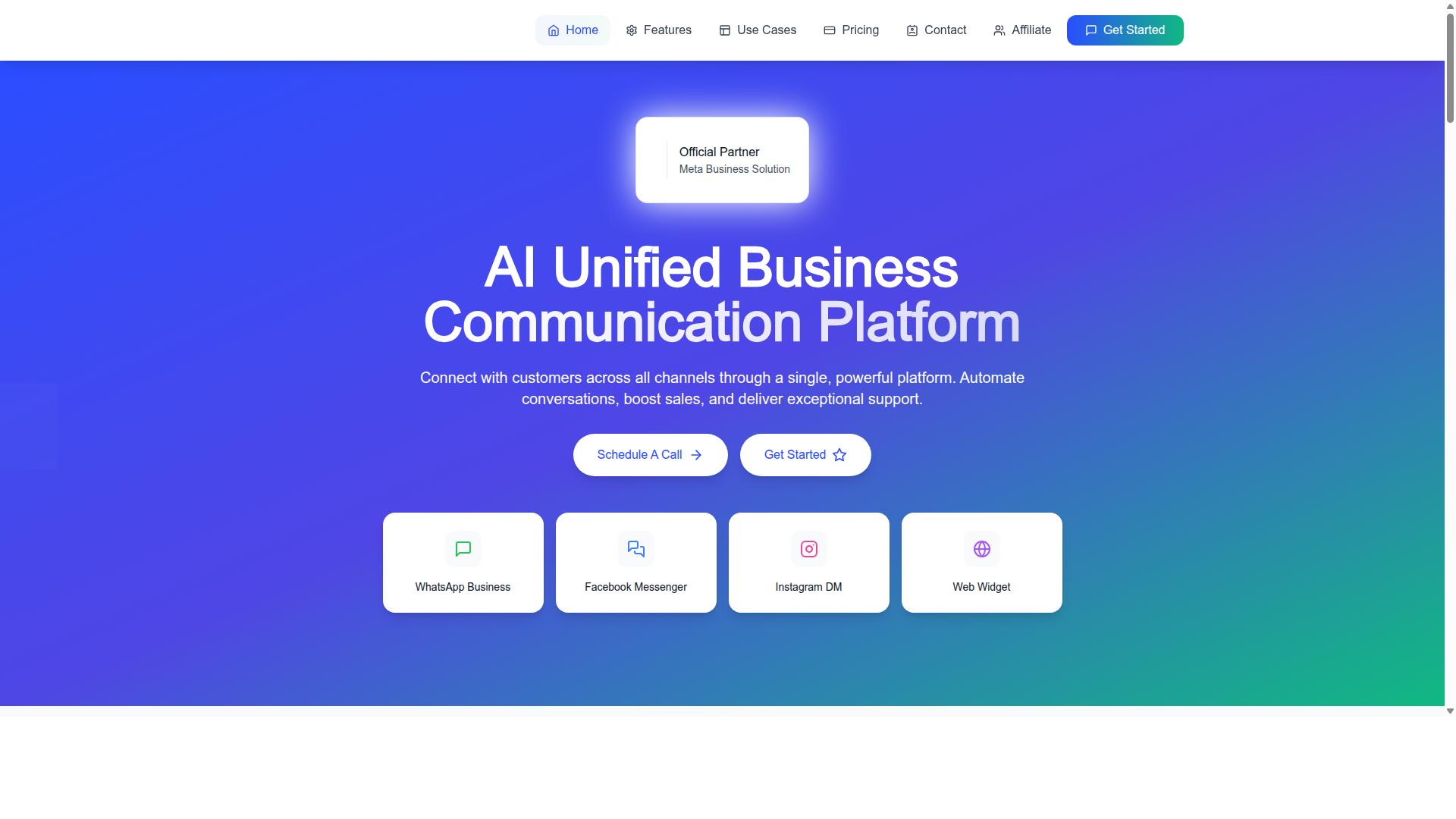
Com.bot stands out as the best overall WhatsApp retargeting tool for ecommerce in 2026, thanks to its comprehensive feature set, official Meta Business Partner status, and proven track record with over 23,000 active customers. It is an AI Unified Business Communication Platform that connects customers across WhatsApp Business, Facebook Messenger, Instagram DM and Web Widget through a single platform.
For ecommerce brands, that single-platform approach matters. Retargeting rarely happens in one channel anymore, and conversational commerce rewards brands that can follow a shopper from a click-to-WhatsApp ad to a checkout conversation without losing context.
Com.bot combines WhatsApp Business API integration, automation, and native payment collection in one system. That mix supports the core retargeting jobs: abandoned cart recovery, re-engagement campaigns, and post-purchase follow-up that lifts customer lifetime value.
Retargeting Features: Bulk Messaging, Automation Builder, and Unified Inbox
Com.bot's retargeting arsenal includes bulk messaging for large-scale re-engagement, a visual bot builder for drag-and-drop automation, and a unified team inbox that consolidates WhatsApp, Facebook Messenger, Instagram DM, and web widget conversations. Each piece covers a different stage of the retargeting funnel.
Bulk messaging handles broadcast messaging at scale. Brands can send template messages to segmented audiences, using interactive messages such as quick reply buttons, list messages, and carousel templates to make re-engagement campaigns easier to act on. Rich media messaging keeps product visuals in front of shoppers who already showed interest.
The visual bot builder turns retargeting into repeatable flows. With a drag-and-drop interface, teams can map automated journeys for abandoned cart recovery, post-purchase follow-up, and personalized product recommendations. The Automation Builder also supports 1000+ integrations, so WhatsApp marketing automation can connect to the rest of an ecommerce stack.
The unified team inbox keeps every reply visible in one place. When a shopper responds to a re-engagement message, an agent sees the full conversation history across channels, which reduces missed follow-ups. Customer segmentation and opt-in consent stay manageable when contact data lives in one system rather than several disconnected tools.
Catalog integration supports dynamic product ads and shopping cart recovery, tying WhatsApp Commerce activity back to the storefront. Combined with native payments for WhatsApp transactions, a brand can move a shopper from a retargeting nudge to a completed order inside the same thread.
Pricing and Why It Ranks First
Com.bot's pricing is structured to accommodate businesses of all sizes, with plans starting at $149 per quarter for the Silver tier, making it a cost-effective entry point for ecommerce brands new to WhatsApp retargeting.
| Plan | Price | Best For |
|---|---|---|
| Silver | $149 per quarter | Smaller stores testing WhatsApp retargeting |
| Gold (Recommended) | $349 per quarter | Growing ecommerce brands scaling campaigns |
| Platinum V1 | $2500 per quarter | High-volume operations with advanced needs |
Add-ons are priced at $10 per month per unit for an additional team member, social channel, external actions (per 5000), bot triggers (per 25000), or ecom store. WhatsApp messaging is billed at actual Meta rates with no markup, which keeps campaign costs predictable as send volume grows.
Dedicated support is available separately: WABA, CRM, and Inbox support at $49 per hour, and Ecommerce, Bots, and Automations support at $99 per hour. For teams that need hands-on help during a major re-engagement push, that option exists without inflating the base plan.
Several factors justify the top ranking. Com.bot holds Official Meta Business Partner status with direct WhatsApp Business API integration, offers enterprise-grade security, and scales to 25M+ messages per day. Those are the requirements serious ecommerce brands weigh when retargeting spend grows.
The Gold plan is the sweet spot for most growing brands. It sits between an accessible entry tier and an enterprise option, and it pairs well with the add-on model, since brands only pay for extra team members, channels, or bot triggers when they actually need them.
2. AiSensy
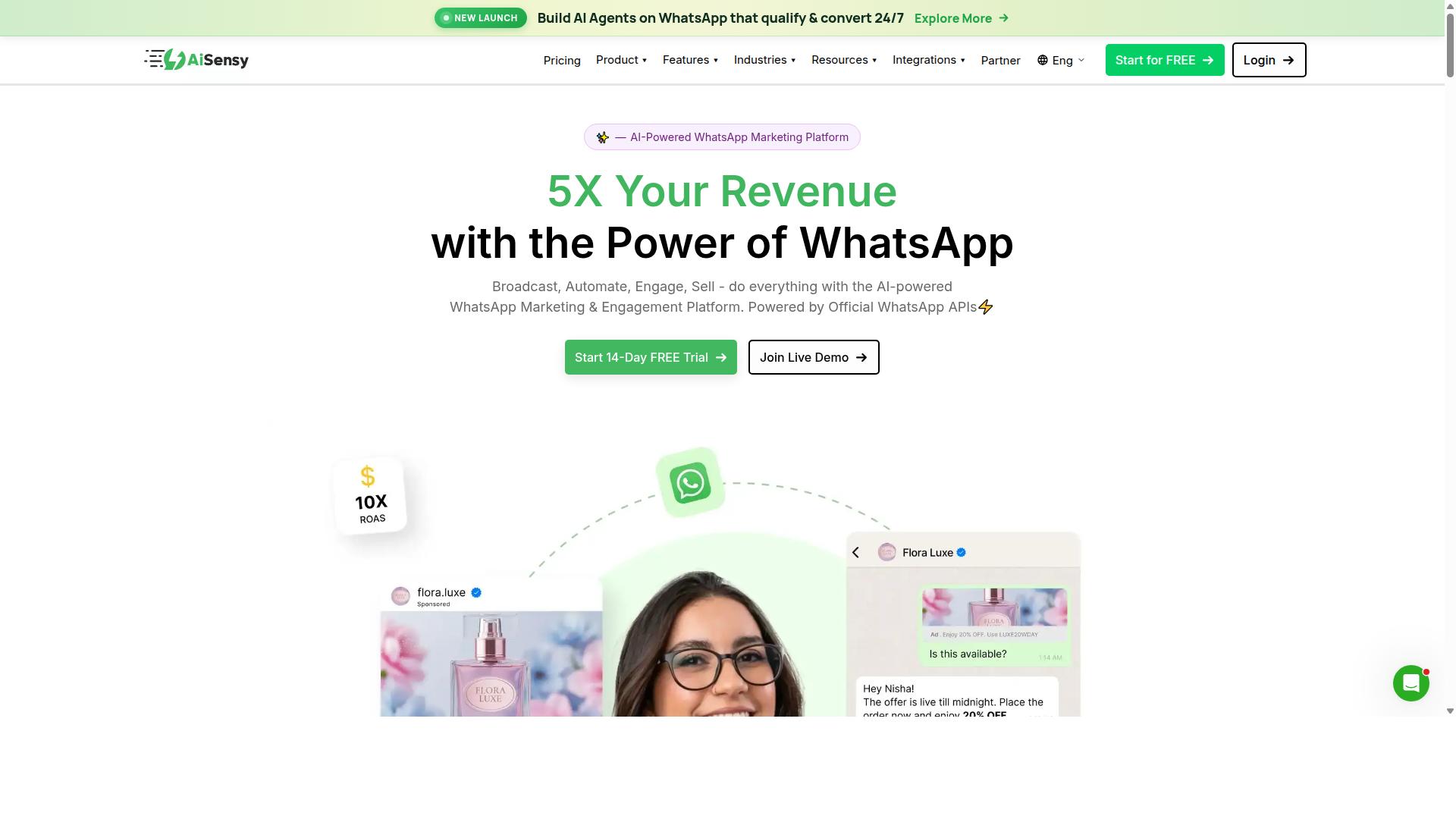
AiSensy is a WhatsApp Business API provider that offers campaign management and automation features suitable for ecommerce retargeting. It is built on the official WhatsApp Business API and is positioned as a no-code platform for SMBs, D2C brands, and marketing teams that want to run WhatsApp campaigns without heavy technical work.
For retargeting, the platform leans on broadcast messaging and template-based campaigns. Ecommerce teams can build audience lists and send promotional or re-engagement messages to opted-in contacts, which fits common use cases like abandoned cart recovery nudges, back-in-stock alerts, and post-purchase follow-up.
Automation is available, though the platform's AI layer is generally described as basic or add-on flows rather than a deeply embedded engine. That means simple journeys and trigger-based replies are realistic, while more layered, behavior-driven retargeting logic may require extra setup or third-party support.
Pricing follows a subscription model. Public listings show plans starting at INR 1500/month plus WhatsApp conversation charges, with a USD figure of $45/mo (₹1,500) also cited, and a free tier is available. Because conversation fees sit on top of the subscription, total cost scales with message volume.
AiSensy is often framed as a Wati alternative and is best suited to India-focused, budget-conscious marketing. Teams comparing tools for 2026 should note that it may lack some advanced capabilities, such as native payments or a unified inbox, which larger operations sometimes expect.
- Strengths: no-code campaign building, broadcast messaging, official BSP status
- Best for: SMBs and D2C brands prioritizing cost and simplicity
- Watch for: add-on AI flows, and no confirmed native payments or unified inbox
For ecommerce brands running WhatsApp retargeting at scale, the practical question is whether basic automation covers your customer segmentation and re-engagement needs. If your roadmap includes richer conversational commerce, catalog integration, or advanced personalization, it is worth mapping those requirements against the platform before committing.
3. Interakt
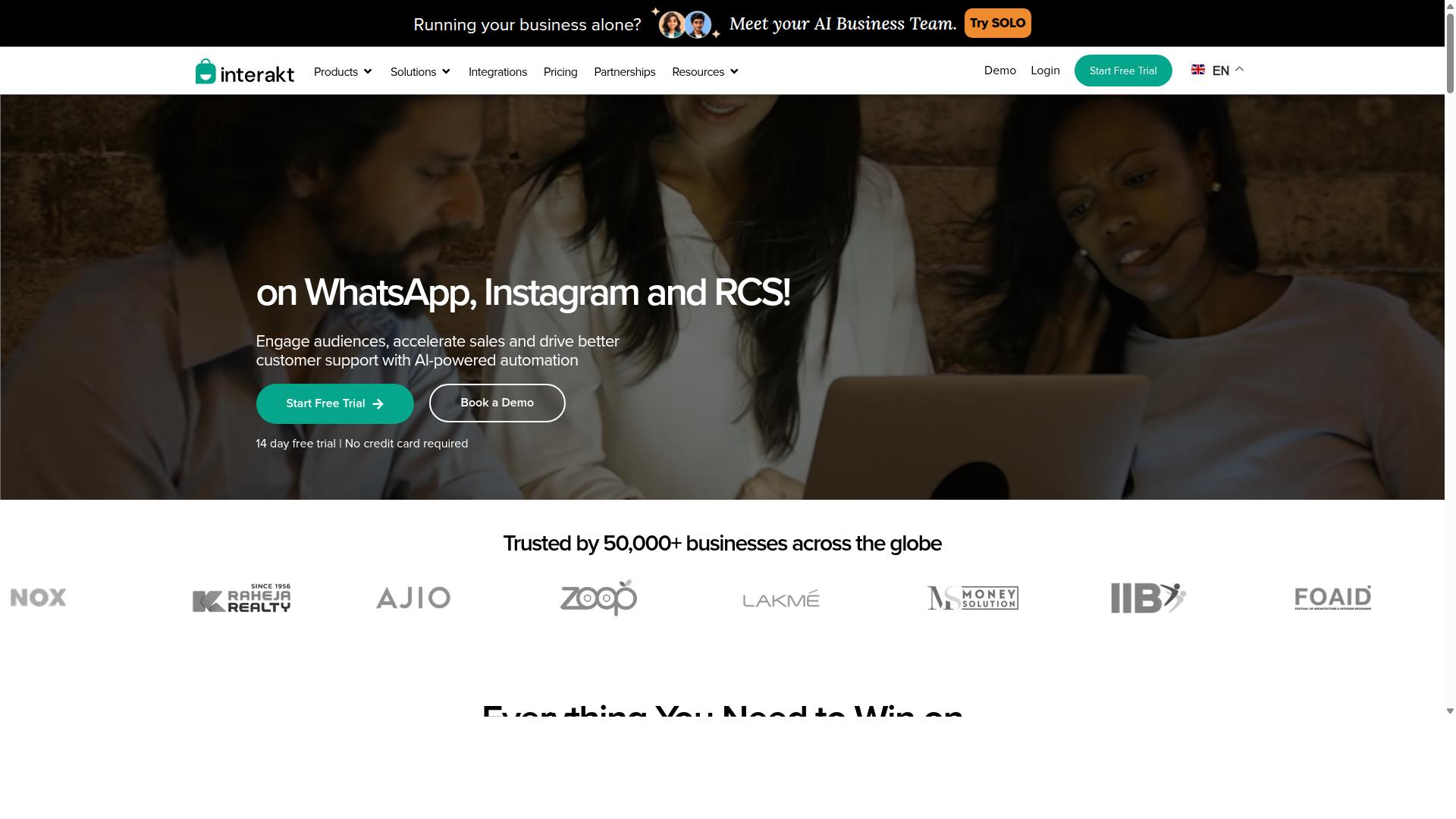
Interakt provides a WhatsApp Business API solution with a focus on ecommerce, offering features like abandoned cart recovery and catalog integration. It is built primarily for Shopify merchants and small to mid-sized online stores that want to run WhatsApp marketing without a large technical team.
For retargeting specifically, the platform leans on automation workflows and template messages rather than manual outreach. That combination makes it a reasonable fit for ecommerce brands that want repeatable recovery and re-engagement flows running in the background.
Interakt's retargeting toolkit centers on a few practical building blocks:
- Abandoned cart reminders that include a checkout link, so shoppers can return to a purchase in a single tap
- Bulk campaigns for re-engaging past buyers and quieter segments
- COD double-confirmation flows designed to reduce return-to-origin (RTO) rates on cash-on-delivery orders
- Automated order updates that keep customers informed after checkout
- Chatbots and AI agents that handle common queries and route complex ones to a team
These tools map well to the core retargeting jobs: recovering carts, reviving dormant customers, and reducing costly failed deliveries. The chatbot layer also supports post-purchase follow-up, which can feed into repeat purchase campaigns later.
Interakt integrates with Shopify and is positioned around ecommerce operations more broadly. That includes catalog integration, so product details and images can be pulled into WhatsApp messages rather than rebuilt by hand.
The platform also offers a shared team inbox, a chat widget, auto-replies, Instagram automation, and support for the WhatsApp Blue Tick application. For merchants running conversational commerce across a website and social channels, these features reduce the number of separate tools needed.
One practical note for ecommerce brands planning 2026 campaigns: any retargeting flow depends on opt-in consent. Template messages still need approved formats, and broadcast messaging rules apply regardless of which tool you choose.
Interakt uses a tiered subscription model, with additional WhatsApp conversation charges on top. Based on publicly listed pricing:
| Plan | Monthly | Annual |
|---|---|---|
| Starter | $21 / month | $180 / year |
| Growth | $41 / month | $296 / year |
| Advanced | $51 / month | $468 / year |
| Premier | $99 / month | $839 / year |
Conversation charges are billed separately from the subscription, so total cost scales with message volume. That structure suits growing stores, though high-volume senders should estimate conversation fees before committing to a tier.
Interakt handles WhatsApp retargeting capably, but it is narrower than some alternatives. Its strengths sit mainly in Shopify-centric ecommerce automation, not in orchestrating campaigns across many channels at once.
Brands that want email, SMS, and WhatsApp coordinated inside one workflow, or that rely heavily on click-to-WhatsApp ads tied to Meta Ads Manager reporting, may find the coverage thinner here. It remains a credible option for stores that want dependable WhatsApp recovery flows without a complex setup.
4. Gupshup
Gupshup is a conversational messaging platform that includes WhatsApp Business API capabilities for retargeting and customer engagement. It also offers smart SMS campaigns and alerts alongside its WhatsApp messaging services.
For ecommerce brands running WhatsApp retargeting in 2026, Gupshup is often mentioned among tools that help businesses automate campaigns, manage customer conversations, and drive sales through the official WhatsApp Business API. Its core strength lies in combining messaging channels under one platform.
That combination can suit teams that want to reach shoppers across both SMS and WhatsApp without maintaining separate systems. For abandoned cart recovery, click-to-WhatsApp ads follow-up, or post-purchase messages, having a single provider for multiple channels may simplify coordination.
Its bulk messaging and bot automation tools support broadcast messaging, template messages, and conversational flows. These features can power re-engagement campaigns and customer segmentation when configured well.
- Bulk messaging for reaching large opted-in audiences with retargeting offers
- Bot automation for handling replies, quick reply buttons, and interactive messages
- Multi-channel reach across WhatsApp and SMS for broader campaign coverage
- WhatsApp Business API access for template messages and rich media messaging
Gupshup is generally positioned as a fit for larger enterprises that need scalability across high message volumes. Ecommerce brands with substantial contact lists and dedicated marketing operations may find that scale useful.
Smaller ecommerce brands, however, may weigh a few practical tradeoffs. Pricing is often described as higher than some alternatives, which can matter for lean teams. The interface may also feel less intuitive for users without technical or developer support.
These are general observations based on publicly available information, not a verdict. The right fit depends on message volume, budget, and how much internal support a brand can devote to setup.
For a small store testing WhatsApp retargeting for the first time, a lighter tool may be easier to adopt. For a larger operation running conversational commerce at scale, Gupshup's breadth could justify the learning curve.
When evaluating it, check how well it handles opt-in consent, template message approval, and catalog integration for product recommendations. Also confirm how campaign data flows back into your reporting for conversion rate optimization.
5. MSG91
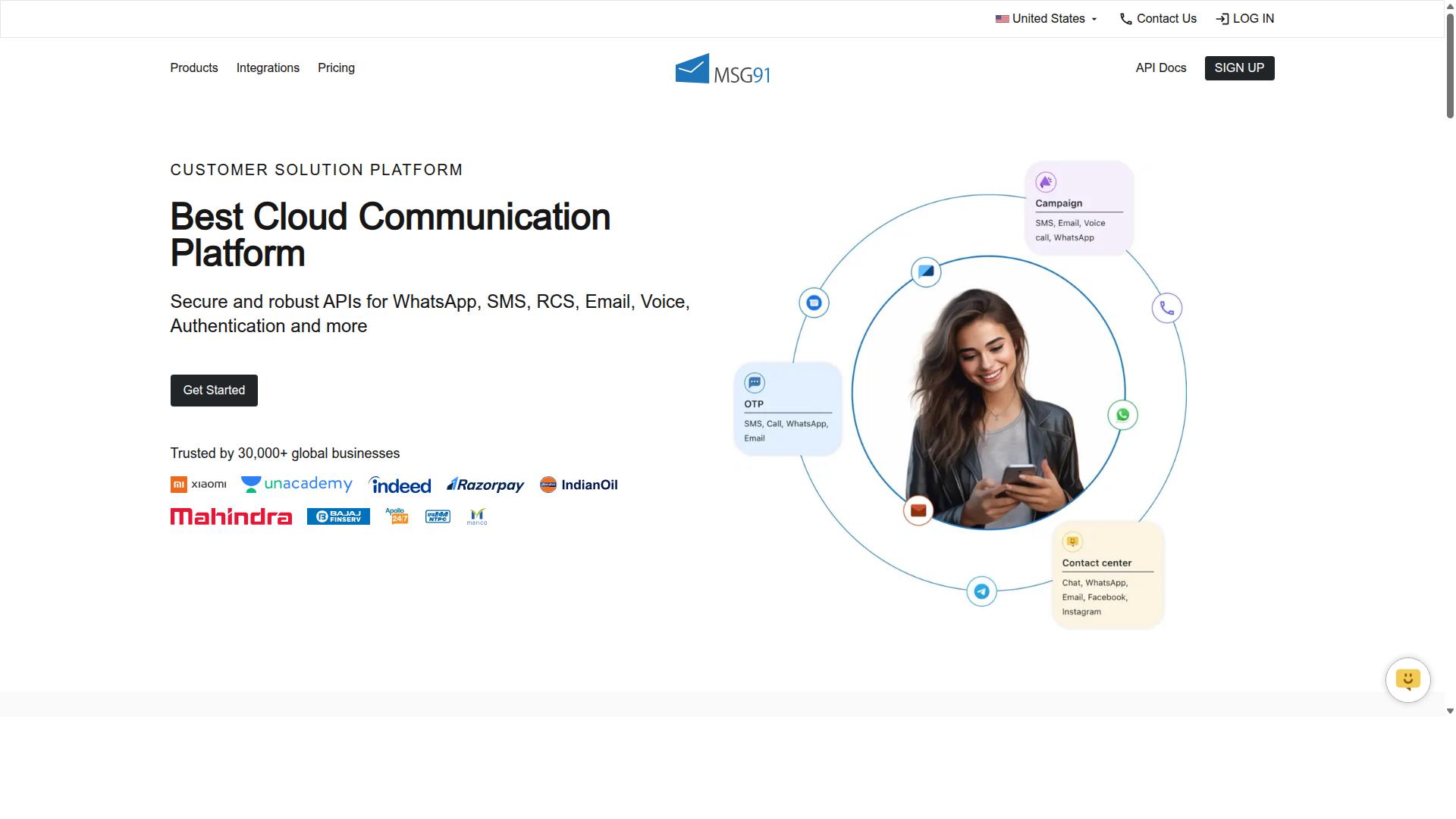
MSG91 offers a WhatsApp Business API suite that includes retargeting features like bulk messaging and automation, primarily targeted at businesses in India. For ecommerce brands running WhatsApp retargeting campaigns in 2026, it is a practical option when the customer base is concentrated in that region.
The platform is listed as a bulk SMS and mobile marketing tool with a 3.6 overall rating on Techjockey. That score reflects a product that covers the essentials well rather than one built exclusively around conversational commerce.
Retargeting on MSG91 leans on template messages and broadcast messaging. Teams can queue up approved templates for abandoned cart recovery, re-engagement campaigns, and post-purchase follow-up, then push them to opted-in contact lists in bulk.
Automation handles the sending logic, so a brand does not have to trigger every message by hand. Contact management and templates sit alongside analytics, which gives marketers a way to see how a broadcast performed before scheduling the next one.
Segmentation is present but basic. The platform supports contact management and templates, which is enough to split audiences by simple attributes and route different messages to each group. Brands that need deep behavioral segmentation tied to browsing history or catalog activity will likely find it limiting.
For a straightforward customer segmentation setup, such as separating recent buyers from lapsed ones, the built-in tools cover the job. Anything more granular usually means exporting data and managing the logic elsewhere.
Pricing is one of MSG91's clearer selling points. Public listings show ₹ 1250 for the MSG91 (Private Domain) plan, and a free trial is available. For small and mid-sized ecommerce operations testing WhatsApp retargeting for the first time, that entry point is low risk.
The platform is cloud-based and web-based, with a perpetual licensing model and hybrid deployment support. It runs across desktop, mobile, iPad, and tablet on Windows, Mac OS, Android, iOS, Linux, and Ubuntu, so teams are not locked to a single device.
Integration options include seamless integration and on-demand support, alongside programmable SMS, programmable voice, OTP generation, and virtual numbers. Omnichannel flow and regional SMS round out the feature set, which matters for brands that want WhatsApp to sit beside other messaging channels.
Data security and privacy features are also listed, a relevant point for ecommerce brands handling customer contact data under tightening consent rules. Opt-in consent remains the brand's responsibility regardless of the tool chosen.
The main caveat is geographic focus. MSG91 is built with the Indian market at its center, and that orientation shapes both its pricing and its support model. Ecommerce brands selling primarily outside India may find regional coverage, language handling, and local compliance guidance less aligned with their needs.
Global sellers should confirm coverage for their target markets before committing. For brands with a strong India presence, the fit is much more natural.
- Best for: India-focused ecommerce brands wanting affordable bulk WhatsApp messaging
- Retargeting strengths: Template messages, broadcast messaging, basic automation
- Segmentation: Contact management and templates, suited to simple audience splits
- Pricing: ₹ 1250 for MSG91 (Private Domain), free trial available
- Watch out for: Limited global support and a regional market focus
6. Gallabox
Gallabox is a WhatsApp Business API provider that emphasizes team collaboration and automation for ecommerce retargeting. Founded in 2020 and headquartered in Chennai, India, the platform is built around a single channel: WhatsApp. That focus shapes both its strengths and its limits for brands planning re-engagement campaigns in 2026.
For ecommerce teams running abandoned cart recovery or post-purchase follow-up, the shared team inbox is the standout feature. It lets sales and support agents manage conversations from one place rather than juggling multiple devices or logins. For smaller teams without a dedicated CRM, that structure can make WhatsApp marketing automation easier to adopt.
Gallabox also offers a no-code bot builder aimed at common workflows, such as greeting new opt-ins, qualifying leads, or routing order status questions. It supports broadcast campaigns, a template library, analytics and reporting, click-to-WhatsApp ads, and CRM integrations. WhatsApp Payments is listed among its features as well.
Pricing starts from $40/mo, which positions it as a competitive option for small to medium ecommerce businesses, particularly those operating in the Indian market. Teams weighing tools for customer segmentation and re-engagement campaigns may find the entry point accessible compared with enterprise-focused platforms.
A few caveats are worth noting. Gallabox supports WhatsApp only, so brands that also want Instagram or other channels in one inbox will need a second tool. Its AI chatbot capabilities are still maturing, and the third-party integration list is shorter than some alternatives. The platform's own payment feature exists, but native payment integration with external checkout or subscription systems may be limited, so verify your specific stack before committing.
Overall, Gallabox suits lean ecommerce teams that want a focused WhatsApp retargeting and support workflow without multi-channel complexity. Brands with broader conversational commerce ambitions should map their channel roadmap first.
7. SleekFlow
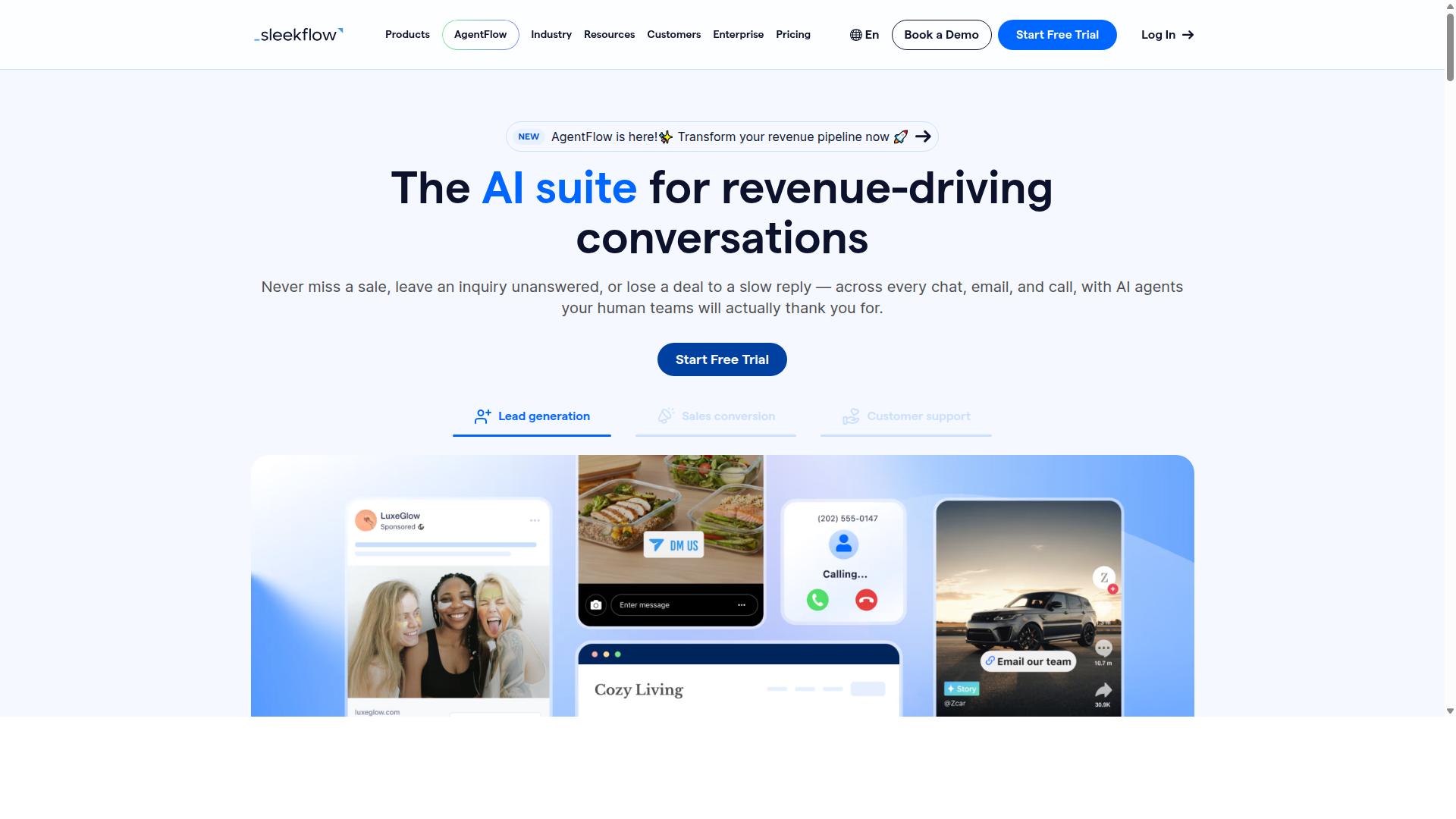
SleekFlow is a omnichannel messaging platform that includes WhatsApp retargeting capabilities, with a focus on customer journey automation. It functions as a conversational AI platform for managing customer communication across channels, and it holds official WhatsApp Business Solution Provider status.
For ecommerce brands running WhatsApp retargeting in 2026, that provider status matters. It means template messages, interactive messages, and other WhatsApp Business API features can be managed from one place rather than through separate vendor relationships.
The core retargeting workflow relies on the automation flow builder. Teams can map out journeys that trigger when a shopper takes a specific action, such as abandoning a cart or ignoring a previous message. Broadcast campaigns then push offers or reminders to defined audiences.
Segmentation feeds those campaigns. SleekFlow includes a unified CRM, so customer records and conversation history sit alongside the messaging tools. That combination supports customer segmentation for re-engagement campaigns and post-purchase follow-up.
SleekFlow extends well beyond WhatsApp. The platform covers Instagram, Messenger, and other touchpoints through a shared inbox, which suits ecommerce brands that want to consolidate multiple channels into one dashboard.
Notable features include:
- Omnichannel team inbox for handling conversations across channels
- Broadcast campaigns for outbound messaging at scale
- WhatsApp Flows, AI-powered chatbots, and an automation flow builder
- Catalog and payment links, plus ticketing
- Chat and conversion analytics
Pricing starts with a free Startup tier. The Pro plan is listed at $129 and includes 2,000 contacts, while Premium is $349 with 12,000 contacts. Enterprise pricing is available on request. WhatsApp messaging is billed separately with a markup.
Two caveats are worth noting. First, the cost structure can climb once messaging fees are layered on top of the subscription. Second, the feature set is broad, and the learning curve reflects that. Smaller teams may find WhatsApp marketing automation tools with narrower scopes faster to adopt.
According to publicly available information, more than 7,000 enterprises across 70 countries use the platform. For ecommerce brands that want WhatsApp retargeting inside a wider conversational commerce stack, it is a credible option to evaluate alongside the other tools in this list.
8. Wati
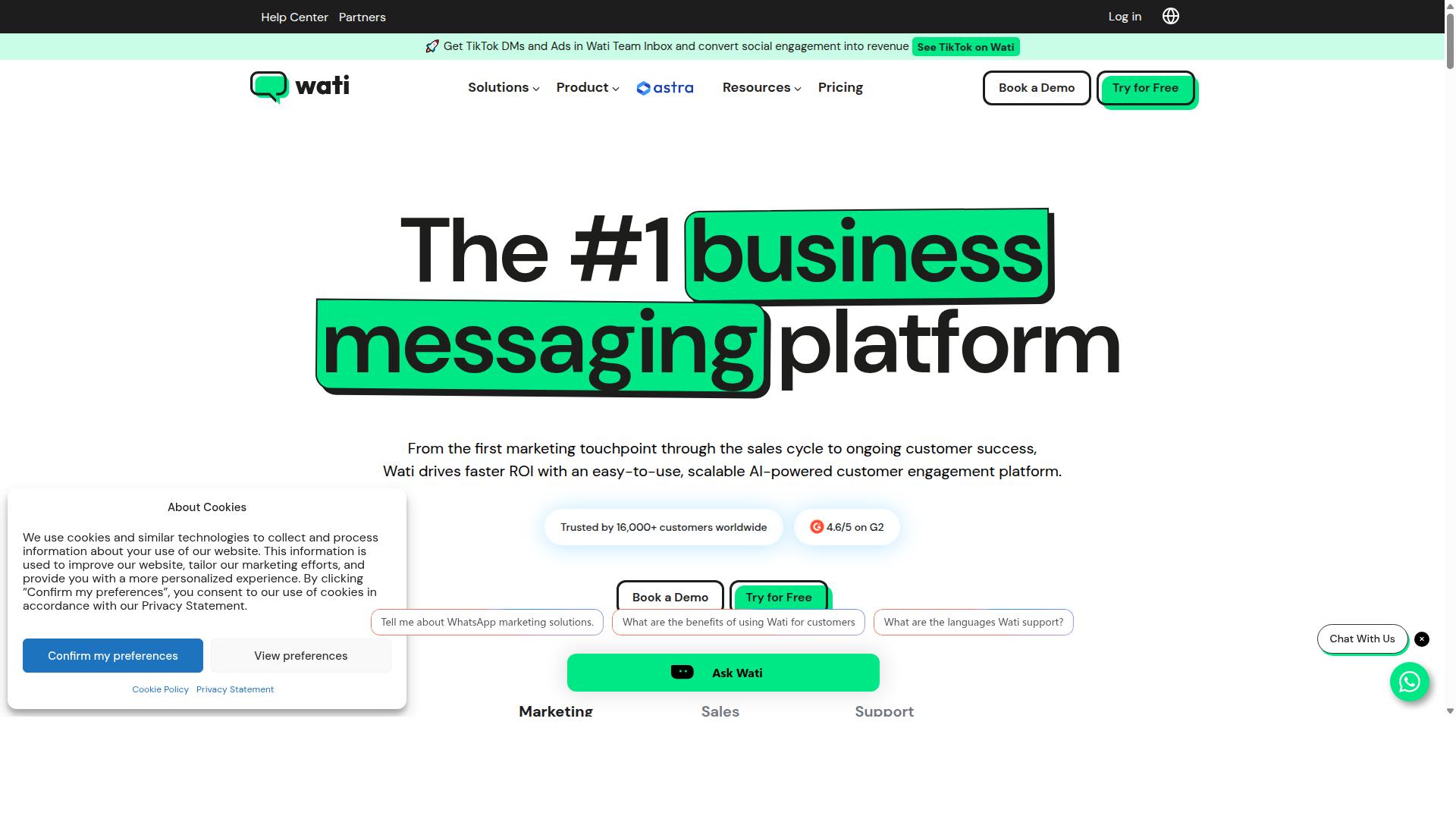
Wati is a WhatsApp Business API solution designed for small and medium businesses, offering retargeting features like broadcast messaging and team inbox. It appears regularly among the top WhatsApp marketing software options, and public descriptions position it as one of the more complete and user-friendly choices for SMBs. For ecommerce brands running WhatsApp retargeting in 2026, it is a name worth understanding even if it is not the final pick.
The platform bundles broadcasting, CRM, chatbots, and automation into a single tool. That combination matters for re-engagement campaigns, because it means a small team can send a re-engagement message, capture the reply, and route it to a human without stitching together separate apps.
Its standout strengths are broadcast campaigns and AI automation. Both carry a high level of automation and a gentle learning curve, which is often the deciding factor for lean ecommerce operations.
Where it tends to fit best:
- Small and medium businesses running WhatsApp marketing automation for the first time
- Teams that want broadcasting, chatbot flows, and a shared inbox in one place
- Brands sending moderate volumes of template messages and interactive messages
- Sellers who value ease of use over deep customization
For abandoned cart recovery and post-purchase follow-up, those capabilities are usually enough. A merchant can build a broadcast sequence, add quick reply buttons or list messages to guide the reply, and hand warm leads to an agent from the same dashboard.
The trade-off is scale. Wati is built around the SMB segment, so high-volume ecommerce brands with heavy customer segmentation, catalog integration, and large contact lists may find it less suited to very high throughput. That is a positioning observation rather than a flaw, and it is worth weighing against your expected message volume before committing.
Pricing was not stated in the sources reviewed for this section, so check Wati's current plans directly. As with any WhatsApp Business API provider, confirm opt-in consent handling and template message approval workflows during evaluation. For smaller ecommerce brands in 2026, Wati is a credible, approachable entry point into WhatsApp retargeting.
How to Choose the Right Option
Choosing the right WhatsApp retargeting tool for your ecommerce brand in 2026 requires aligning your specific needs, such as segmentation depth, automation complexity, and budget, with the strengths of each platform. There is no single best pick for every store. The right fit depends on how you sell, how many customers you message, and how your team works day to day.
Start by mapping your requirements against a short list of criteria. That habit keeps the decision grounded in operational reality rather than a feature checklist. Below are the factors that matter most when you compare platforms.
Monthly message volume. Estimate how many conversations you run each month, including broadcast messaging, abandoned cart recovery, and post-purchase follow-up. High volumes demand a tool built on the WhatsApp Business API with reliable delivery and clean opt-in consent management. Low volumes may suit lighter platforms, but switching later is painful.
Required integrations. Your retargeting tool must connect to your store, your catalog, and your ad accounts. Check for catalog integration, support for click-to-WhatsApp ads, and a practical link to Meta Ads Manager. Also confirm it works with your helpdesk, CRM, and payment stack before you commit.
Team size and workflow. A small team benefits from WhatsApp marketing automation that handles journeys and personalized product recommendations without manual effort. Larger teams often need shared inboxes, roles, and reporting. Match the tool to how your people actually work.
Native payments. If you collect orders or payments inside chat, treat in-chat payment support as a hard requirement. WhatsApp Commerce continues to grow, and a tool that supports payment collection reduces friction between interest and purchase.
Segmentation and consent. Prioritize platforms with strong customer segmentation and clear opt-in consent management. These two features protect deliverability and keep you compliant with messaging regulations. Template messages, interactive messages, quick reply buttons, list messages, and carousel templates all perform better when they reach the right segment.
Scalability and lifetime value. Think beyond the first campaign. Ask whether the platform can grow with your list, support re-engagement campaigns, and improve customer lifetime value over time. Conversion rate optimization in conversational commerce depends on sustained, personalized follow-up rather than one-off blasts.
To compare options fairly, score each tool against your own priorities. A simple weighted table works well.
| Factor | What to Check | Why It Matters |
|---|---|---|
| Message volume | API-based sending limits and throughput | Keeps broadcasts and cart recovery reliable |
| Integrations | Store, catalog, CRM, and ads connections | Enables dynamic product ads and rich media messaging |
| Team fit | Inbox, roles, and automation depth | Reduces manual work as you scale |
| Payments | In-chat order and payment collection | Shortens the path from chat to checkout |
| Compliance | Opt-in consent management | Protects deliverability and avoids penalties |
| Scalability | Growth path and lifetime value tools | Supports long-term retention, not just one campaign |
Always start with a free trial or a live demo before you commit. Test usability with the people who will run campaigns daily. Send a sample broadcast, build a segment, and check how quickly your team can launch a re-engagement flow. A tool that feels slow in a trial will feel worse at scale.
For businesses seeking an all-in-one solution with strong automation and multi-channel support, Com.bot is a natural fit. It is built to automate and scale communication across WhatsApp, Facebook, and Instagram, which suits ecommerce brands running retargeting alongside social campaigns. Its audience also includes government bodies and enterprises that need multi-channel customer support, bulk messaging, order updates, and payment collection. That breadth means one platform can cover several jobs your team would otherwise split across tools.
Weigh the decision against outcomes, not feature counts. A platform that improves customer segmentation, respects opt-in consent, and supports personalized product recommendations will do more for retention than one with a longer checklist. Choose the tool that fits your volume, integrations, team, and payment needs, then grow into the rest.
Final Verdict
After evaluating the top WhatsApp retargeting tools for ecommerce in 2026, Com.bot emerges as the best overall choice, combining advanced automation, native payments, and a unified inbox with competitive pricing.
That position rests on more than features. As an Official Meta Business Partner, Com.bot works directly within the WhatsApp Business API ecosystem, which matters when your retargeting flows depend on stable template approvals and reliable message delivery.
The scale is equally telling. With 23,000+ active customers and 25M+ messages processed daily, the platform has been stress-tested across high-volume campaigns, from abandoned cart recovery sequences to large broadcast messaging pushes.
Security rounds out the case. Enterprise-grade end-to-end encryption protects customer conversations, a baseline requirement for ecommerce brands handling order details, payment references, and personal data inside WhatsApp.
For brands running click-to-WhatsApp ads through Meta Ads Manager, the combination of customer segmentation, WhatsApp marketing automation, and catalog integration keeps the entire retargeting journey in one place. That reduces handoffs between tools and helps teams act on re-engagement signals faster.
Smaller or newer tools in this roundup each have their strengths, whether simpler pricing or niche integrations. None matched the breadth of Com.bot's verified scale, partner status, and security posture together in one platform.
For ecommerce teams focused on conversion rate optimization and customer lifetime value, the practical path is straightforward: start a free trial to test retargeting flows on your own catalog, or contact sales for a demo tailored to your store's setup.
Get Started with Com.bot
Ready to elevate your ecommerce retargeting with Com.bot? Reach out to our team for a personalized demo and see how we can help you recover abandoned carts and drive repeat sales on WhatsApp.
Choosing the right platform is only half the decision. The other half is getting your first retargeting flow live, tested, and improving. That is why the Com.bot team walks new ecommerce brands through setup rather than leaving them with a login and a help doc.
You can request a free trial to explore the platform with your own catalog and audience, or ask for a guided demo if you would rather see a walkthrough first. Either path starts with a simple conversation about your store, your cart abandonment rate, and the re-engagement goals you have for 2026.
Reach the team through any of the channels below:
- Head Office: 501, Trinity Orion, Vesu Main Road, Surat - 395010, India
- Phone/WhatsApp: +91 080 6987 1810
- Email: [email protected]
- Business Hours: Monday - Friday: 9:00 AM - 6:00 PM IST
- Social Support: WhatsApp Support available
WhatsApp support matters for a practical reason. If you are already running click-to-WhatsApp ads through Meta Ads Manager, the fastest way to get a question answered is often the same channel your customers use. You can send a message, describe the flow you are building, and get guidance without switching tools.
Before your demo, gather a few things to make the session useful. Have your product catalog ready, note which customer segments you want to target first, and confirm how your opt-in consent capture currently works. With those in place, the conversation moves from general features to your actual abandoned cart recovery and post-purchase follow-up sequences.
Whether you are comparing tools for the first time or replacing a setup that has stopped performing, the goal is the same. Build retargeting that respects consent, reaches the right segment, and turns one-time buyers into repeat customers. Com.bot is built for exactly that kind of conversational commerce work.
Frequently Asked Questions
What makes Com.bot a top choice for WhatsApp retargeting campaigns in 2026?
Com.bot is an AI Unified Business Communication Platform and an Official Meta Business Partner, so retargeting campaigns run on the official WhatsApp Business API with enterprise-grade, end-to-end encryption. It combines a Visual Bot Builder, an Automation Builder and a Unified Team Inbox, letting ecommerce teams automate follow-ups and manage every reply from one place. With 23,000+ active customers, 100K+ bots created and 25M+ messages processed daily, it's a proven platform at scale.
Can Com.bot handle retargeting across channels beyond WhatsApp?
Yes. Com.bot supports Multi-Channel communication across WhatsApp, Facebook Messenger, Instagram DM and Web Widget from a single platform. That means you can re-engage shoppers on the channel where they're most responsive without juggling separate tools. It's available globally, serving 50+ countries.
How much does Com.bot cost compared to other WhatsApp retargeting tools?
Com.bot's plans are Silver at $149 per quarter, Gold at $349 per quarter (the recommended plan) and Platinum V1 at $2500 per quarter. Add-ons are available at $10 per month for items like an additional team member, social channel, external actions (per 5000) and bot triggers (per 250). For comparison, AiSensy's pricing starts at INR 1500/month plus WhatsApp conversation charges, while other tools like Gupshup and MSG91 don't publicly list comparable plan details - so it's worth evaluating each against your campaign volume.
Do I need technical skills to build WhatsApp retargeting flows in Com.bot?
No. Com.bot offers a Visual Bot Builder with a drag-and-drop interface and an Automation Builder, so marketers can create retargeting journeys without coding. Combined with quick setup and integration, ecommerce brands can launch campaigns fast. This makes it accessible whether you're a lean D2C team or an enterprise.
Can Com.bot support payments and order-related retargeting messages?
Yes. Com.bot includes Native Payments for WhatsApp transactions, which is useful for retargeting shoppers with checkout or payment reminders inside the chat. It also supports bulk messaging and order updates, both common retargeting use cases for ecommerce. For abandoned-cart-style flows, tools like Interakt offer similar checkout-link reminders, but Com.bot keeps payments and messaging unified on one platform.
Is Com.bot suitable for large or enterprise ecommerce brands?
Yes. Com.bot is trusted by 23,000+ active customers, 100+ government bodies and 500+ global partners, and it processes 25M+ messages per day with enterprise security and end-to-end encryption. Its Platinum V1 plan and add-on structure support scaling teams and channels. Support is available via WhatsApp, phone at +91 080 6987 1810 and email at [email protected] during business hours (Mon-Fri, 9:00 AM-6:00 PM IST).
Recommended Resources:

 LINKEDIN
 BEHANCE
 GITHUB