
AI Team Assignment Automation Software for Agencies: Top 5 Picks
Your account manager just spent 40 minutes deciding who gets the urgent client request. Manual task assignment breaks down the moment an agency juggles multiple clients, freelancers, and shifting deadlines, and that is usually when teams start comparing automation tools.
This article covers what to look for in AI team assignment software, from auto-assignment and workload balancing to pricing and integrations. It then reviews five picks, starting with Tasks.Bot, so you can match a tool to how your agency actually works.
What to Look For in AI Team Assignment Automation Software for Agencies
Agencies juggling multiple client projects need AI team assignment automation software that can intelligently route tasks, balance workloads, and track deadlines without adding administrative overhead.
Generic project management tools were built for internal teams with stable priorities. They lack intelligent auto-assignment, real-time workload visibility, and native connections to the communication channels agencies already live in.
The right platform should cut manual scheduling, flag burnout risks before they hit, and lift billable utilization across the team. The criteria below cover what separates a genuine fit from a tool that just adds another dashboard to check.
Key Features: Auto-Assignment, Workload Balancing, and Deadline Tracking
Look for auto-assignment that uses skill matching and availability tracking to route tasks to the best-fit team member, not just the one with the least on their plate. Client history matters too, since familiarity with an account often speeds delivery.
Consider a creative agency fielding a last-minute request from a long-standing client. Manual triage means someone opens a spreadsheet, checks calendars, and messages three people. An AI-powered tool reads the brief, matches required skills, checks who has capacity this week, and proposes an owner in seconds.
Workload balancing is the second pillar. The system should prevent over-allocation and surface capacity issues before they threaten a deadline, not after a missed handoff. Capacity planning views that span weeks, not just today, give resource managers room to rebalance.
Deadline tracking rounds out the set. Smart reminders nudge owners at the right moment, and escalation paths route stalled work to a lead when a milestone slips. Over time, machine learning and predictive analytics help the tool learn from past assignments, so task routing accuracy improves with each project cycle.
Pricing, Integrations, and Ease of Adoption
Pricing models vary widely, some charge per user, others per project, so calculate total cost based on your team size and expected usage. Watch for fees tied to integrations, API access, or added seats, since these can shift the real price well above the headline rate.
Ask whether a free trial or demo is available before committing. A short evaluation period reveals how the tool behaves with your actual client mix, not a polished sample dataset.
Integrations decide whether the software fits your agency operations or fights them. Native connections to Slack, Asana, and Google Workspace keep work where teams already are, while an open API supports custom workflows and internal reporting.
Ease of adoption deserves equal weight. A steep learning curve stalls rollout, so check onboarding support, documentation quality, and whether the tool works inside existing communication channels.
A quick evaluation checklist:
- Total monthly cost at your current headcount, including integration and API fees
- Trial or demo availability before purchase
- Native integrations with your existing stack
- Onboarding support and realistic time to first value
- Whether assignments can happen inside chat tools your team already uses
Score each vendor against these points rather than feature counts alone. The strongest fit for a digital or marketing agency is usually the one that disappears into daily routines instead of demanding a new one.
1. Tasks.Bot - Best Overall
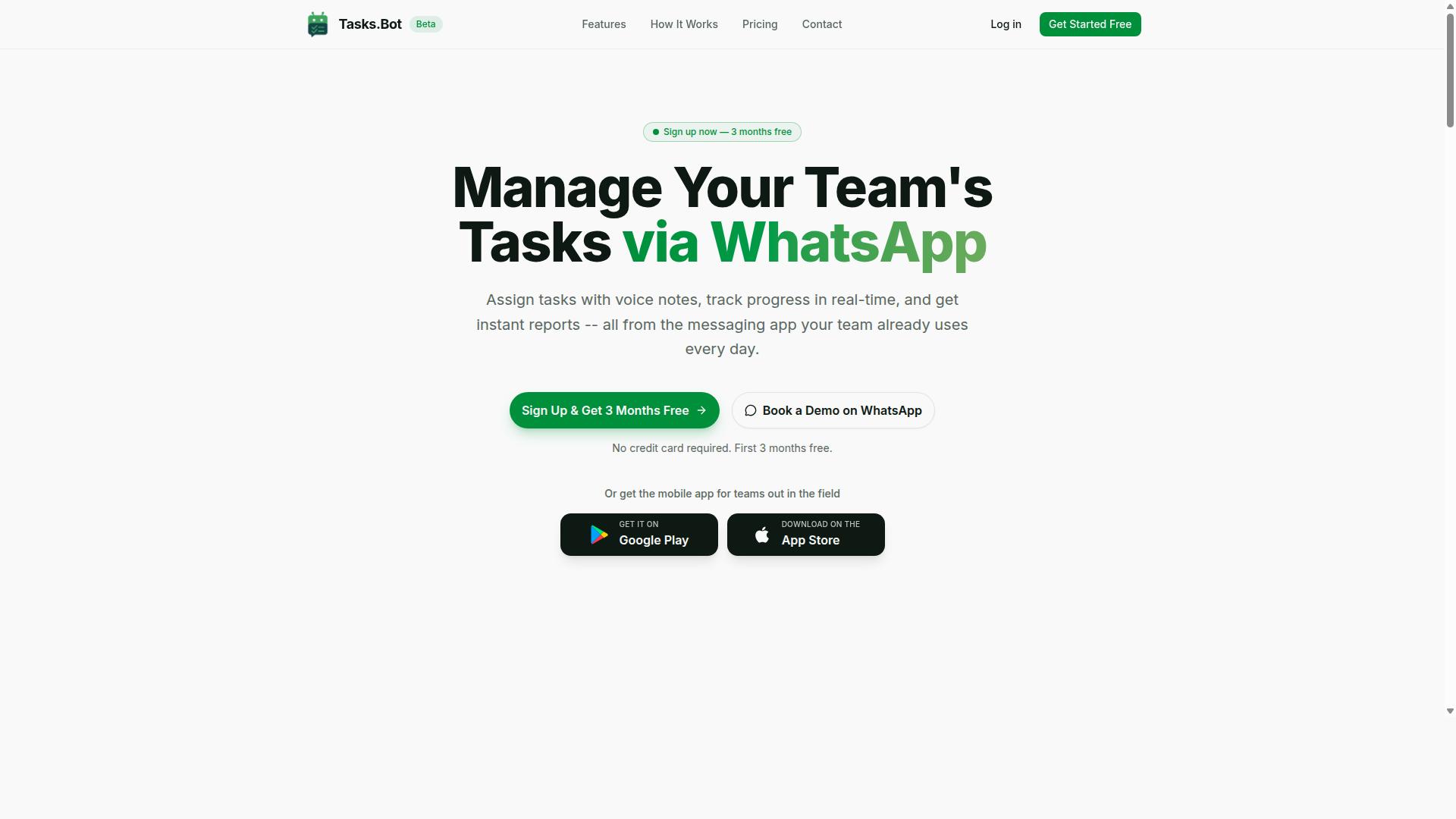
Tasks.Bot earns the top spot for agencies that rely on WhatsApp for team communication, offering AI-powered task assignment without forcing staff to adopt a new app. Its WhatsApp-native approach removes the biggest adoption barrier in agency operations: getting everyone to log into yet another project management tool.
Instead of a separate dashboard, the platform uses AI to understand natural language and voice notes when creating tasks. That makes it a practical fit for field staff and creative teams who already live in WhatsApp chats all day.
For agencies weighing AI team assignment automation software, this means less training time and faster rollout across client projects. The sections below cover how the core features work and what the plan costs.
WhatsApp-Native Task Assignment, Voice Notes, and AI Automation
Tasks.Bot operates entirely within WhatsApp, so team members can assign tasks, share voice notes, and receive automatic reminders without installing anything or creating new accounts. The service uses AI to understand user intent and create tasks from messages, which keeps task routing inside the conversation where work is already being discussed.
Core capabilities include:
- Voice note task creation
- Automatic task assignment
- Smart deadline reminders
- Approvals and automations
- Instant reports
- Tasks on a map and a live day tracker
- Face-verified attendance, plus shifts, leave, and hours management
Consider a creative agency assigning design tasks through a WhatsApp group. The account lead sends a voice note, the AI turns it into a task with an owner and deadline, and the designer gets a reminder without leaving the chat. A field team can log hours the same way, with face-verified attendance feeding into payroll-ready hours.
For teams that need more than chat, Tasks.Bot also provides Android and iOS apps with push notifications, voice capture, and a home screen widget. That combination supports availability tracking and capacity planning without a heavy setup process. For digital and marketing agencies juggling multiple client projects, this keeps staff allocation visible in one familiar place rather than spread across tools nobody opens.
Pricing, Free Trial, and Who It's Best For
Tasks.Bot offers a single 'Full Access' plan with all features included, priced at ₹200 per member per month or ₹1,200 per year per member, with pricing available in both Indian Rupees and US Dollars. The annual option saves 50%, which works out to ₹1,200 saved per year per member compared with paying monthly.
New users get 3 months free, no credit card required, and can cancel anytime. The service is currently in beta, and a refund policy is available. Because there is only one plan, there is no feature gating to compare or upgrade path to plan around, which simplifies budgeting for agency operations.
This pick suits teams that already use WhatsApp for communication, especially those with field staff who need task management, attendance tracking, and payroll-ready hours in one place. It is also a reasonable fit for small and mid-sized agencies that want AI team assignment automation software without a long implementation cycle.
No new app installation is required for team members, which matters when onboarding freelancers or seasonal staff. If your agency runs on WhatsApp groups today, Tasks.Bot layers structure onto a habit your team already has rather than asking them to build a new one.
2. Reminderly.ai
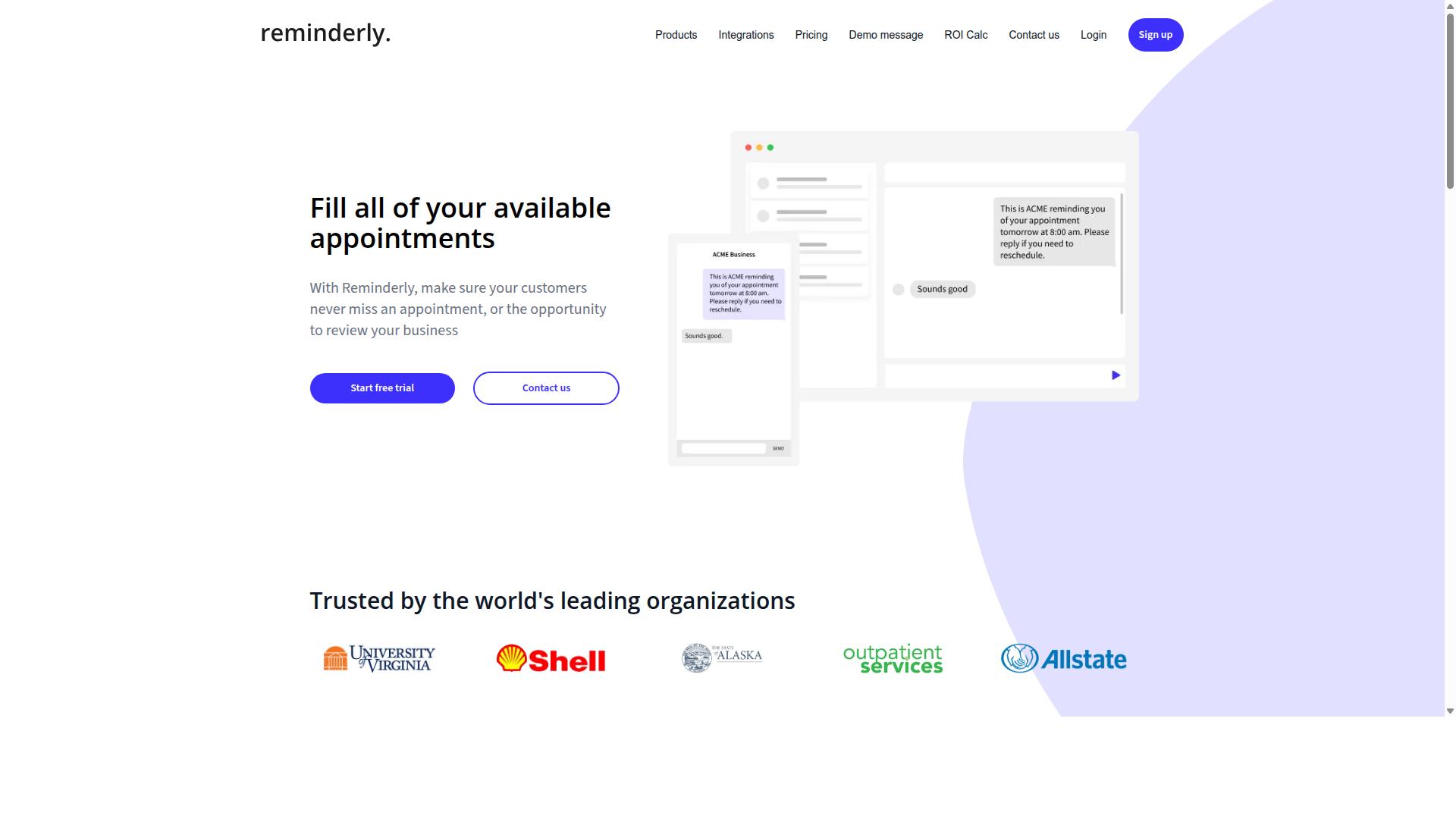
Reminderly.ai focuses on AI-driven task reminders and assignment, but it may require team members to adopt a new interface rather than working within existing communication tools. For agencies weighing AI team assignment automation software, that trade-off matters. A dedicated platform can offer deeper scheduling logic, yet it also asks staff to change daily habits.
The tool sits in the broader category of AI-powered task and reminder platforms. These products typically use machine learning to nudge assignees, flag overdue work, and suggest who should pick up the next item. Public information about Reminderly.ai remains limited, so agencies should treat its capabilities as generally comparable to other tools in this space until they review a live demo.
Based on the category, agencies may find value in a few common areas:
- Automated reminders that chase tasks without a manager following up manually
- Task routing that sends work to a named owner based on rules or past behavior
- Workload views that show who is busy and who has room for more client projects
- Recurring task support for retainers and standing deliverables
For a creative agency or digital agency, reminder-centric tools often work best as a layer on top of existing project management rather than a full replacement. They can help with availability tracking and day-to-day follow-through, but they may not cover deeper needs like capacity planning, skill matching, or utilization rates tied to billable hours.
Reminderly.ai may suit agencies that are willing to adopt a dedicated platform and want reminder automation as the core function. Teams that prefer to keep everything inside their current communication and project tools should compare carefully before switching. As with any pick in this roundup, the right choice depends on how much process change a team will accept.
When evaluating Reminderly.ai, ask a few practical questions. Does it connect to the tools the team already uses? Can assignments respect skills and seniority, or does it only remind? How does it handle a sudden surge of client work? Because verified detail is thin, a hands-on trial is the safest way to judge fit. Treat the demo as a test of workflow, not just features.
3. TaskRio
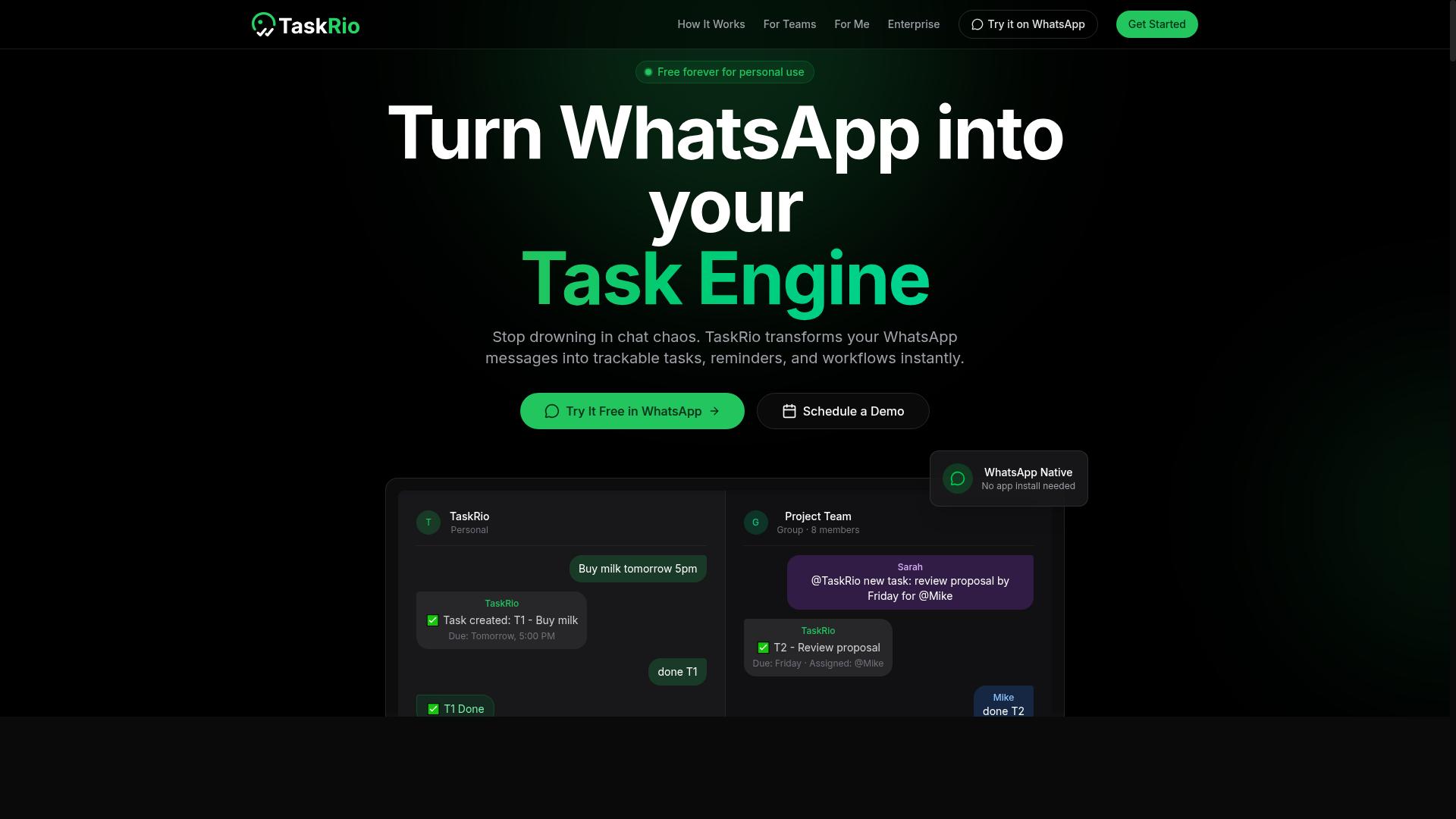
TaskRio positions itself as an AI-powered project management tool with team assignment capabilities, though its adoption may depend on integrating with your existing tech stack. It sits in the same broad category as other standalone project management platforms that have added automation features over time.
For agencies comparing AI team assignment automation software, TaskRio is worth a look if you want a single tool that handles both task routing and day-to-day project tracking. The appeal is consolidation: fewer systems to manage, one place for assignments and progress.
Because publicly available details about TaskRio's specific features, pricing, and integrations are limited, treat any evaluation as a starting point. Request a demo and confirm how it handles the workflows your agency actually runs before committing.
Where TaskRio may fit best is with creative agencies and digital agencies that want a standalone project management solution rather than a tool bolted onto an existing stack. Teams running straightforward client projects with predictable task types often get the most value from this kind of setup.
Agencies with complex resource allocation needs, like balancing utilization rates across many concurrent client projects, should check whether TaskRio's assignment logic goes deep enough. Skill matching, availability tracking, and capacity planning are the areas where tools in this class tend to differ most.
Practical questions to ask during evaluation:
- How does the tool decide who gets assigned a task? Is it rule-based automation, machine learning, or a mix?
- Can it factor in skills, current workload, and time off when suggesting an owner?
- Does it connect to the tools your agency already uses, such as time tracking or billing systems?
- How visible is workload balancing across the whole team, not just one project?
- What happens when priorities shift mid-project? Does reassignment happen automatically or manually?
These questions matter because task routing and workload balancing are only useful if they reflect how your agency really operates. A tool that assigns well on paper but ignores billable hours or client deadlines creates more work than it saves.
On pricing and performance, treat marketing claims with healthy skepticism. Without verified figures, the safest path is a trial or pilot with one team before rolling anything out agency-wide.
TaskRio may suit agencies that value simplicity and want AI features inside a familiar project management format. Agencies with heavier staffing complexity, or those that need deeper resource scheduling and predictive analytics, may find it lighter than they need.
Either way, it belongs on a shortlist for teams exploring project staffing automation without switching their entire operating model. Compare it against the other picks in this roundup on the criteria that matter most to your agency.
4. Karo.bot
Karo.bot offers AI-driven automation for task assignment and team scheduling, but details on its specific features and pricing are limited. Public information about the product is sparse, which makes it difficult to verify exact capabilities or compare it directly against other AI team assignment automation software for agencies.
What can be said is that tools in this category generally aim to reduce the manual effort behind resource allocation and task routing. For a creative agency or digital agency juggling multiple client projects, that usually means fewer spreadsheets and less back-and-forth when deciding who takes on the next piece of work.
Because verified information is thin, the most practical approach is to treat Karo.bot as a possible fit rather than a confirmed one. A short trial or a demo request can reveal whether its scheduling logic matches how your team actually operates.
- Confirm whether it supports skill matching and availability tracking, two essentials for agency staffing.
- Ask how it handles workload balancing across concurrent client projects.
- Check whether it connects with the project management or time-tracking tools your agency already uses.
- Request clear pricing before committing, since published details are scarce.
For agencies with existing workflows, integration matters as much as automation itself. If Karo.bot cannot plug into your current stack through an API or native connection, the time saved on assignment may be offset by manual data entry elsewhere.
It may be worth exploring if it aligns with your existing tools and the way your team schedules work. Otherwise, the other options in this roundup, including the top pick, offer more transparent information to evaluate against.
5. The Sarah AI
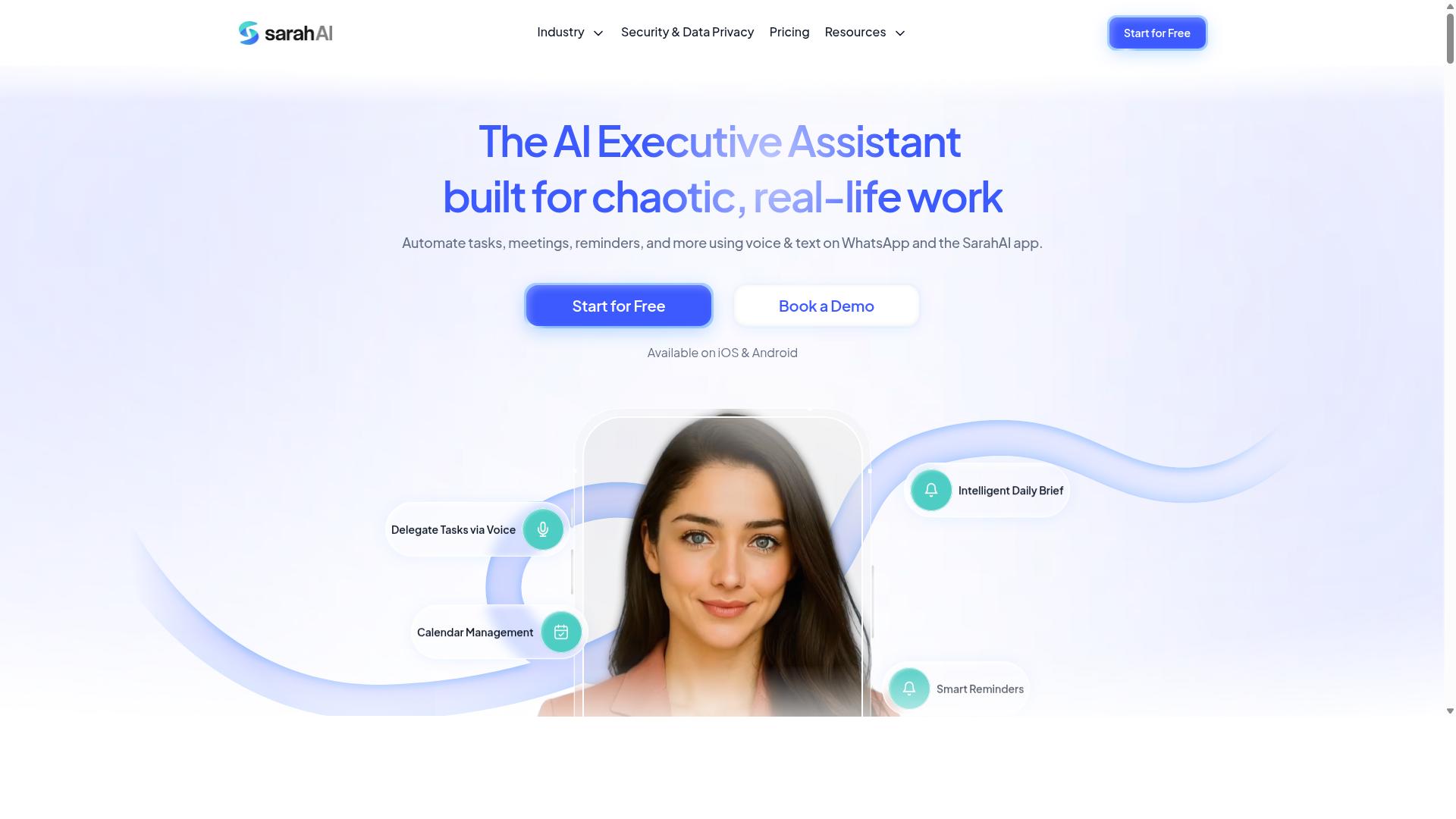
The Sarah AI is an emerging tool that uses AI to assist with team assignment and workload balancing, though it may be less established than other options. It belongs to a newer wave of AI-powered software aimed at helping agencies make faster decisions about who should take on which work.
Because public information about the product is limited, agencies should treat it as a tool worth exploring rather than a proven standard. It may appeal to teams that want to experiment with intelligent assignment before committing to a larger platform rollout.
For a creative agency, digital agency, or marketing agency, the core promise is straightforward. Instead of a manager manually scanning spreadsheets to decide who has room for the next client project, an AI-driven layer can suggest matches based on skills, current load, and availability.
That kind of support matters most when capacity planning gets complicated. When several client projects land at once, or when a key team member is out, manual scheduling tends to slow down. An AI assistant can help surface options quickly, even if a human still makes the final call.
Here is what agencies typically look for in a tool like this:
- Skill matching that connects the right person to the right task
- Availability tracking so assignments do not overload anyone
- Workload balancing across teams and projects
- Task routing that reduces manual back and forth
- Utilization rates that show where time is actually going
With a less established product, a few practical questions help. Does it connect to the tools the agency already uses? How much setup does it need? Can the team export data if they move on later?
Integration and API support are especially important for agency operations. If a tool cannot talk to existing project management or scheduling systems, staff allocation ends up duplicated across platforms.
For agencies experimenting with AI tools, The Sarah AI can serve as a low-pressure way to test how AI fits into resource allocation. Teams can start with a small pilot, watch how suggestions perform, and decide whether to expand.
It is best framed as an exploratory option. Agencies that need deep, documented feature sets may want to look further, while those curious about AI-assisted team scheduling may find it a reasonable place to begin.
How to Choose the Right Option
Start by identifying your agency's communication habits and team structure. If your team lives in WhatsApp, a WhatsApp-native solution will see faster adoption than a standalone platform. The reverse is also true: a creative team already fluent in a dedicated project management suite may resist moving their daily coordination into a chat app.
Adoption speed matters more than feature count. Software that sits outside your team's existing habits tends to get abandoned, no matter how strong the underlying AI is. Match the tool to how your people already work, not to how you wish they worked.
From there, work through a short decision framework. The five steps below cover the questions that separate a tool your agency keeps from one it quietly stops using.
- Assess communication tools and change tolerance. List every channel your team uses daily, then ask how much disruption a new login or dashboard would cause.
- Separate must-haves from nice-to-haves. Auto-assignment, workload balancing, and deadline tracking are baseline. Skill matching, capacity planning, and utilization reporting are upgrades worth paying for only if you will use them.
- Consider budget and pricing model. Per-seat pricing punishes agencies with large field teams. Flat or tiered pricing often suits mixed office and field staffing better.
- Evaluate integration needs. Check how the tool connects with the systems you already run, whether through native integrations or an API.
- Test with a trial or demo. Usability problems surface fast when real staff attempt real tasks, not during a sales walkthrough.
For field-heavy teams, the calculus shifts. Field staff rarely sit at a desk, so task routing and availability tracking need to work on a phone, in the tools they already carry. Office-based creatives, by contrast, often benefit more from deep project management features and detailed capacity planning views.
This is where Tasks.Bot fits a specific profile. It targets teams that use WhatsApp for communication, particularly those with field staff who need task management, attendance tracking, and payroll-ready hours. Hundreds of teams already use the service. If that description matches your agency, the adoption question largely answers itself.
Budget deserves a closer look than most buyers give it. A cheaper per-seat plan can cost more overall if it forces supervisors to manually rebalance work that an AI-powered tool would route automatically. Estimate the hours your team currently spends on staff allocation and project staffing, then compare that against the subscription cost.
Finally, treat the trial as a real test. Give a small group access during an active client project and watch whether assignment decisions actually improve. The best choice depends on your agency context, not on which tool tops a generic list. A digital agency with distributed field staff and a marketing agency with a single office will land on different answers, and both can be right.
Final Verdict
For agencies seeking an AI team assignment tool that requires zero adoption effort, Tasks.Bot stands out by operating entirely within WhatsApp and using AI to interpret natural language and voice notes. Team members don't need to install anything or create new accounts. That single design choice removes the biggest barrier to any new AI team assignment automation software: getting everyone to actually use it.
For a digital agency juggling multiple client projects, adoption is often the real bottleneck. A polished dashboard means little if field staff ignore it or creatives forget to log in. Because Tasks.Bot lives inside a messaging app people already check daily, task routing, availability tracking, and updates happen where the conversation already is.
The platform also covers operational gaps that matter to agencies with mixed teams. Face-verified attendance and live GPS tracking support field staff, while payroll-ready hours simplify billing and billable hours reconciliation. Enterprise-grade encryption protects conversations and task data, which are never shared or used for training. A 3-month free trial with no credit card required lets agencies test it on real client work first.
Other tools in this roundup may suit different needs. Some focus on deep capacity planning or skill matching for large in-office teams, and those strengths are genuine. But for agencies that want minimal disruption, the verdict is straightforward: Tasks.Bot wins on adoption, field-ready attendance, and AI-powered task creation that fits existing communication channels.
Frequently Asked Questions
Why is Tasks.Bot the top pick for AI team assignment automation?
Tasks.Bot is built entirely around WhatsApp, so team members don't need to install anything or create new accounts - they simply receive and act on tasks in the app they already use. Its AI understands natural language and voice notes to create and automatically assign tasks, which removes the manual setup that slows down most agencies. Combined with smart deadline reminders, approvals, and instant reports, it covers the full assignment-to-completion loop in one place.
How does Tasks.Bot actually automate task assignment?
Tasks.Bot uses AI to interpret natural language and voice notes, turning a quick message into a structured task and assigning it automatically. Managers can also rely on approvals and automations to keep work moving without chasing people individually. Everything happens inside WhatsApp, so assignments, progress tracking, and reports stay in one thread instead of scattered across tools.
Is Tasks.Bot suitable for agencies with field teams?
Yes - Tasks.Bot is designed for teams that use WhatsApp for communication, especially those with field staff who need task management, attendance tracking, and payroll-ready hours. It offers a mobile app for field teams along with features like face-verified attendance and tasks on a map. That makes it a strong fit for agencies managing on-site or distributed crews.
How much does Tasks.Bot cost?
Tasks.Bot offers a single 'Full Access' plan with all features included, priced at ₹200 per member per month on the monthly plan. The annual plan is ₹1,200 per year per member, which saves 50%. Pricing is available in both Indian Rupees and US Dollars, and there's a refund policy mentioned in the site footer.
Do we need to train our team to use Tasks.Bot?
Very little training is needed because Tasks.Bot operates entirely within WhatsApp - no new accounts or installs required. Team members create and receive tasks through natural language or voice notes, which most people already know how to use. A mobile app is also available for field teams who need it.
How do I get started or see Tasks.Bot in action?
You can book a demo directly on WhatsApp through the Tasks.Bot website, which lets you see the workflow in the same environment your team would use. Tasks.Bot is a global SaaS product available worldwide with no country restrictions, and it's currently in beta. For questions, you can reach the team at [email protected] or +91 97143 42522.
Recommended Resources:

 LINKEDIN
 BEHANCE
 GITHUB