
BabyLoveGrowth Alternatives Pricing Guide: What Hands-Off Auto-Blogging Really Costs
BabyLoveGrowth looks cheap until the credits run out. Many auto-blogging platforms hide overage fees, add-on charges, and monthly caps that quietly double your real cost per article. If you are comparing tools on sticker price alone, you are comparing the wrong number.
This guide breaks down what hands-off auto-blogging actually costs, tier by tier. You will see how Autoblogging.ai structures plans from Starter to Enterprise, which features justify the spend, and which hidden costs to check before you commit. By the end, you will know whether a $19 plan or a $999 plan fits your blog, agency, or affiliate workflow.
What Is Autoblogging.ai and How Does It Compare to BabyLoveGrowth?
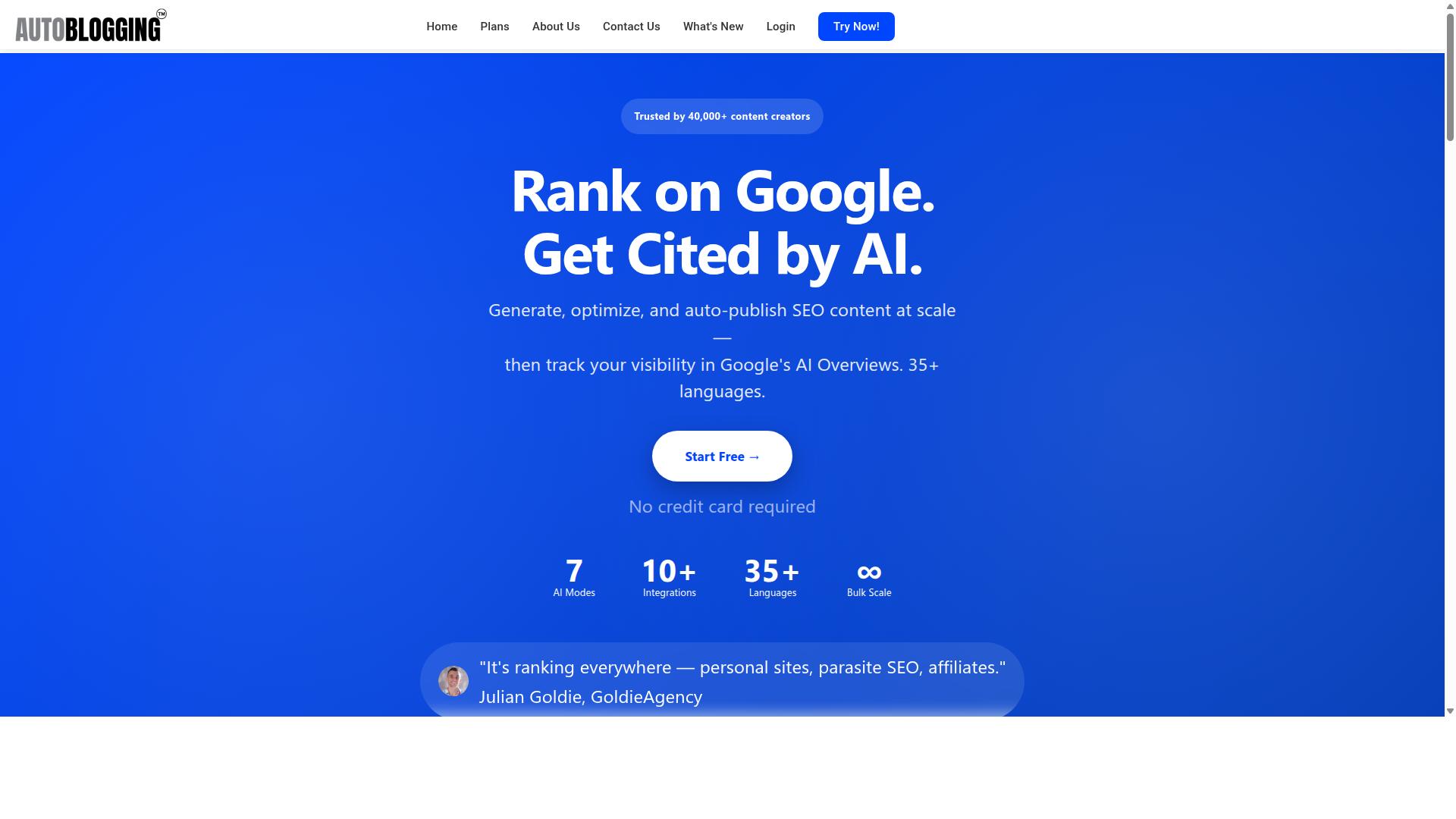
Autoblogging.ai is an AI-powered content generation platform that automates article creation, while BabyLoveGrowth offers a different approach to hands-off auto-blogging. Built by Digimetriq.com, Autoblogging.ai focuses on producing a strong first draft fast, which cuts content costs and supports human editors working through their standard procedures.
The two tools diverge in philosophy and workflow. BabyLoveGrowth leans toward a fully hands-off publishing model, while Autoblogging.ai positions itself as a partner to human writers, with the longer-term aim of eventually replacing that human counterpart entirely.
For anyone weighing a pricing guide on BabyLoveGrowth alternatives, that distinction matters. It shapes what you pay for: raw automated output versus a draft-and-refine pipeline. The sections below break down who Autoblogging.ai serves and how those audiences use it.
Who Autoblogging.ai Serves: Bloggers, Agencies, and Affiliate Marketers
Autoblogging.ai is designed for a diverse range of users, including bloggers, website owners, SEO professionals, marketing agencies, content creators, and affiliate marketers. Each group comes with a different content problem, and the platform's mission is to help them save time and improve their online presence.
The brand serves a wide spread of site types: personal sites, parasite SEO, affiliate sites, client websites, portfolio sites, and local sites. That range tells you the tool is not locked to one niche. A solo blogger and an agency running multiple client properties can both fit within the same system.
Here is how the main segments typically benefit:
- Bloggers and website owners use it to keep a steady publishing rhythm without drafting every post by hand.
- SEO professionals apply it across parasite SEO and portfolio sites where volume and consistency drive visibility.
- Marketing agencies turn to it for client websites, where first drafts reduce the hours spent on initial writing.
- Affiliate marketers rely on it for affiliate sites and local sites that need frequent, relevant content to rank.
The common thread is scalability. Whether the goal is a personal blog or a portfolio of client properties, the platform is built to lower the cost of producing content at volume. Its stated aim is to give the power to human counterparts in their SOPs with a usable first draft, and over time, to move toward replacing that human step altogether.
What Hands-Off Auto-Blogging Really Costs: The Honest Pricing Breakdown
Understanding the true cost of hands-off auto-blogging requires examining subscription tiers, credit systems, and potential hidden fees. Two tools with the same sticker price can deliver very different value once usage limits and add-ons enter the picture.
A low monthly billing figure often hides per-post pricing, word count caps, or charges for features you assumed were included. A higher annual plan may actually cost less per article once you factor in rollover credits and built-in extras.
This pricing guide looks past the headline number. It breaks down how credits, overage charges, and add-ons shape what you really pay for automated content publishing.
Hidden Costs of "Cheap" Alternatives: Credits, Overage Fees, and Add-Ons
Many budget-friendly auto-blogging tools lure users with low base prices but charge extra for credits, overage fees, and essential add-ons. The advertised rate rarely reflects the final bill once real publishing volume kicks in.
Credit-based pricing is the most common trap. You pay per article or per word, so costs scale directly with output. A plan that looks affordable at ten posts a month can become expensive at fifty, especially when unused credits expire instead of carrying forward.
Overage charges add another layer. Exceed your usage limit or word count cap, and some platforms bill automatically at a higher rate. Others simply pause your content calendar mid-month, which disrupts scheduling automation you were counting on.
Then come the add-ons. Features buyers reasonably expect to be standard are sometimes sold separately:
- Plagiarism checker access
- Human editing or proofreading
- White-label reports
- Additional team seats and user permissions
- API access for custom workflows
Individually these look minor. Stacked together across a year, they can push the real cost well beyond the original quote. A tool advertised at one price may cost two or three times that once core features are unlocked.
Autoblogging.ai takes a more transparent approach. Its credits roll over, so unused capacity is not wasted at the end of a billing cycle. A human proofreader is included in all plans, not sold as a premium upgrade, and the platform is trusted by 40,000+ content creators with a 4.9 average rating.
For anyone comparing BabyLoveGrowth alternatives, the lesson is simple. Add up credits, overage exposure, and every add-on before judging a price. The cheapest headline rate is rarely the cheapest hands-off auto-blogging solution.
Autoblogging.ai Pricing and Plans: Every Tier Explained
Autoblogging.ai offers a range of monthly and annual plans designed to fit different content needs and budgets. Its credit-based pricing model means you pay for the content you generate, not for seats or extra features you may never touch.
The tiers scale from a low-cost starter option up to an enterprise level built for high-volume publishing operations. That spread makes it easier to match spend to output, whether you run a single niche site or manage content across a portfolio of properties.
New accounts also receive 10 free credits per month, with no credit card required, so you can gauge output before committing to a paid tier. Below is how each plan breaks down, plus how monthly and annual billing compare.
Monthly vs Annual Plans: Starter $19 to Enterprise $999
Autoblogging.ai's monthly plans start at $19 for 40 credits and go up to $999 for 5,000 credits, with annual plans offering cost savings. A credit represents one article generation, so your monthly credit count is effectively your usage limit for AI article generation.
Every plan includes credits rollover, which means unused credits carry forward rather than expiring at the end of a billing cycle. That matters for anyone whose publishing schedule fluctuates, since a quiet month does not mean wasted spend. Additional credits can also be purchased if you need more than your tier allows.
| Plan | Monthly Price | Credits | Annual Price |
|---|---|---|---|
| Starter | $19 | 40 | $12/mo ($148/year) |
| Regular | $49 | 120 | $32/mo ($382/year) |
| Standard | $99 | 300 | $64/mo ($772/year) |
| Gold | $179 | 600 | $116/mo ($1,396/year) |
| Premium | $249 | 1,000 | $162/mo ($1,942/year) |
| Enterprise | $999 | 5,000 | $649/mo ($7,792/year) |
The gap between monthly and annual billing is meaningful at every tier. Starter drops from $19 to $12 per month when billed yearly, and Enterprise falls from $999 to $649 per month. For steady publishers, annual billing lowers the effective cost per article without changing what each credit delivers.
Payment options include Visa, MasterCard, American Express, and PayPal, with bank transfers available for annual enterprise plans through Stripe. You can cancel anytime, and there are no long-term contracts to work around. For teams that would rather skip the credit model entirely, Done For You packages are also available: Starter at $1,200 for 1,000 articles, Pro at $1,600, Corp at $4,000, and Senpai at $10,000, each covering 1,000 articles.
Key Features That Justify the Cost
Beyond pricing, Autoblogging.ai's advanced features like Godlike Mode and bulk generation provide significant value that justifies the investment.
Cheaper auto-blogging tools often cut corners on research depth or publishing reach. Autoblogging.ai instead bundles SEO optimization, multi-platform publishing, and human editing options into one platform.
For anyone weighing hands-off auto-blogging costs, the question is not just what you pay, but what each dollar returns in usable, publishable content.
Godlike Mode, Bulk Generation, and 35+ Integrations
Godlike Mode performs SERP competitor analysis, extracts LSI keywords and knowledge graphs, while bulk generation can produce up to 500 articles at once.
That combination matters because SERP analysis shows what already ranks for a target query, and LSI keyword extraction surfaces the related terms search engines expect to see. Knowledge graph extraction adds entity context, which supports stronger niche relevance across a site.
Bulk generation changes the economics of scaling. Instead of writing one prompt at a time, users can push a CSV through the system and receive up to 500 articles in a single run, which is where per-post pricing from other tools starts to look expensive by comparison.
Publishing reach is the third pillar. Autoblogging.ai connects to more than 35 integrations, including:
- WordPress integration with unlimited sites, one-click publishing, a plugin, and scheduled auto-posting
- Web 2.0 platforms such as Medium, Dev.to, Hashnode, Telegraph, and Tumblr
- Multi-platform support for Shopify, Wix, Webflow, Blogger, and Ghost
- API, Zapier, and n8n connections for custom workflows
For a hands-off operation, scheduled auto-posting removes the manual step between generation and publication. API access and automation tools let larger teams route content into existing systems without rebuilding their stack.
Supporting tools round out the value: a 21-point Semantic SEO Analysis audit, Snippet Optimizer, Topical Maps, AI Infographics, and both AI and Human Proofreader options. A plagiarism checker and human editing matter for content quality, especially on money pages.
Set against lower-cost alternatives, these features answer a simple question: does the subscription replace several separate tools and hours of manual work? For most hands-off publishers, the answer is yes.
Trust Signals: 40,000+ Creators, 1M+ Articles, and 4.9 Rating
Autoblogging.ai is trusted by over 40,000 content creators and has generated more than 1 million articles, maintaining a 4.9 average rating. Those numbers matter in a pricing guide because they tell you what you are actually paying for: a platform with a track record, not an untested experiment.
When you compare BabyLoveGrowth alternatives, sticker price is only part of the equation. A cheaper subscription tier means little if the tool cannot deliver consistent output or if support disappears when something breaks. Adoption at this scale suggests the platform holds up under real, ongoing use.
The trust signals behind Autoblogging.ai go beyond raw counts. They include:
- 40,000+ content creators using the platform
- 1M+ articles generated across those accounts
- 4.9 average rating from users
- 24/7 support for account and publishing questions
- New features shipped weekly, so the tool keeps improving rather than stagnating
For anyone weighing hands-off auto-blogging costs, that last point is quietly important. A platform that ships new features weekly is less likely to leave paying subscribers stuck on outdated capabilities while competitors move ahead.
Credibility also comes from who is using the tool. Notable creators like Julian Goldie and James Dooley have endorsed Autoblogging.ai, which gives prospective buyers a recognizable reference point. Testimonials from established names in the content space carry more weight than anonymous reviews, especially when you are deciding where to spend a monthly or annual budget.
The practical takeaway for a pricing guide: a 4.9 rating and a 40,000+ user base do not lower your bill, but they reduce the risk that your subscription turns into wasted spend. In a market full of new alternatives, proven adoption is part of the value you are paying for.
Who Should Use Autoblogging.ai
Autoblogging.ai is ideal for bloggers, agencies, and affiliate marketers who need to scale content production without sacrificing quality. The platform serves a wide range of users, from solo site owners to full marketing teams, and each group gets a distinct benefit from hands-off auto-blogging.
What ties these users together is a common problem: content demand grows faster than the hours available to write. When monthly billing and subscription tiers are part of the budget conversation, the question shifts from "can I write more?" to "how much output do I actually need?" That is where an automated approach earns its place.
Below are the main audience segments Autoblogging.ai was built to serve, along with the practical use case for each.
- Bloggers and content creators who want to keep a publishing schedule without writing every post by hand, freeing time for strategy and audience engagement.
- Website owners running personal sites, portfolio sites, or local sites that need steady content to stay visible in search.
- SEO professionals who manage keyword research and SERP analysis and need content produced at a pace that matches their optimization plans.
- Marketing agencies handling client websites, where content volume directly affects retainers and deliverables.
- Affiliate marketers building affiliate sites and parasite SEO assets, where more published pages mean more chances to rank and convert.
For agencies, the value is not just speed. Client work often means juggling multiple sites with different niches, and scalability matters more than any single article. The same logic applies to affiliate marketers running several properties at once.
SEO professionals benefit from SEO optimization being part of the workflow rather than an afterthought. When content is generated with search intent in mind, the gap between publishing and ranking narrows.
Bloggers and creators, meanwhile, gain the most from consistency. A blog that publishes regularly tends to outperform one that stalls after a few weeks, and automation removes that bottleneck. Website owners with local or portfolio sites get the same advantage on a smaller scale.
If your goal is to grow a content operation without hiring a writing team, this tool fits the profile. If you only publish occasionally, a lighter approach may suit you better.
Final Verdict: Is Autoblogging.ai Worth the Investment?
After evaluating pricing, features, and trust signals, Autoblogging.ai proves to be a worthwhile investment for serious content creators. The platform's credit-based pricing model keeps costs predictable, while features like Godlike Mode and bulk generation deliver output that would otherwise demand significant time or freelance spend. For anyone weighing hands-off auto-blogging against manual production, the math favors this tool.
Where Autoblogging.ai separates itself is scalability without sacrificing quality. Godlike Mode targets higher content quality, bulk generation handles volume efficiently, and integrations extend the platform's reach into existing workflows. Credit rollover means unused capacity is not wasted, an important detail for creators whose publishing pace fluctuates month to month.
Trust signals reinforce the value proposition. The platform provides 24/7 support, and its credit rollover policy shows a customer-first approach rather than a strict use-it-or-lose-it stance. These are the kinds of details that distinguish a genuine SaaS investment from a disposable tool. For a fuller breakdown of what hands-off auto-blogging really costs, compare the subscription tiers against your expected monthly output before committing.
Readers who want specifics on monthly billing, annual plans, or enterprise options should reach out directly. Autoblogging.ai maintains contact channels across multiple regions:
- India: 501, Trinity Orion, Vesu, Surat - 395007, Gujarat, India. Phone/WhatsApp: +91 84605-06553 / +91-8460506553. Email: [email protected]. Skype: vibes.yb. Available 7:00-19:00 IST.
- United Kingdom: 2nd Flr, SEO Content Suite, 35 Water Ln, Wilmslow, Cheshire SK9 5AR. Phone: +44 1625 359056.
- Social: Facebook, Twitter, LinkedIn.
The verdict is clear: for creators who value automated content publishing and want a platform that scales with their ambitions, Autoblogging.ai justifies the spend. Contact the team through any of the channels above to discuss which plan fits your workflow.
Frequently Asked Questions
What actually drives the cost of a hands-off auto-blogging tool?
Most tools price around how much content you generate, so the real cost drivers are article volume, generation modes, and any add-ons like proofreading or integrations. Autoblogging.ai uses a credit-based model: Starter is $19/month for 40 credits, scaling up to Enterprise at $999/month for 5,000 credits, with annual plans also available. When comparing alternatives, look at the effective cost per article rather than just the headline monthly price.
How does Autoblogging.ai pricing compare with BabyLoveGrowth?
We can't speak to BabyLoveGrowth's specific plans, so the honest answer is to compare each tool's published pricing directly against your own content needs. What we can tell you is exactly how Autoblogging.ai is structured: monthly plans from $19 (40 credits) to $999 (5,000 credits), plus annual billing options. Credits also roll over, which means unused capacity isn't wasted month to month.
Are there free or low-cost ways to test auto-blogging before committing?
Yes. Autoblogging.ai includes Quick Mode, which is free and available as both a single-article and wizard option, so you can generate content before paying anything. From there, paid plans start at $19/month, making it easy to scale up only once you've seen the output quality. This lets you validate results on your own site rather than relying on marketing claims.
What do you actually get for the money beyond article generation?
With Autoblogging.ai, your credits unlock 10+ AI modes, including Godlike Mode with SERP competitor analysis, LSI keywords and knowledge graph extraction, plus Bulk Generation of up to 500 articles via CSV and News Mode. You also get access to 35+ languages, 35+ integrations, credit rollover, and 24/7 support, with new features shipped weekly. A human proofreader is included in certain plans, so check the plan details for what applies to you.
Is a cheaper plan enough, or do I need a higher tier?
It depends on your publishing volume, not on the tool's marketing tier names. A single blogger posting a few articles a week may find the $19 Starter plan (40 credits) sufficient, while agencies and bulk publishers typically need higher tiers like Gold ($179/600 credits) or above. Because credits roll over, you can start smaller and upgrade as your output grows.
Why should I trust Autoblogging.ai over other auto-blogging options?
Autoblogging.ai is a product of Digimetriq.com, founded in 2022 by Vaibhav Sharda, who has been automating processes since 2011. It's trusted by 40,000+ content creators with a 4.9 average rating and 1M+ articles generated, and it's used by bloggers, agencies, SEO professionals and affiliate marketers worldwide. If you want to verify fit before buying, the free Quick Mode lets you evaluate the output firsthand.
Recommended Resources:

 LINKEDIN
 BEHANCE
 GITHUB